My new book

September is the month of both my mother and father’s birthdays. I honor them with the announcement of the publication of a book I wrote about a chapter in our family’s life: My Fading Father: An End of Life journey.

Dad walking me down the aisle

This is the story of how our family lived together with Dad in his last years and our final earthly goodbye. It was compiled from diaries I wrote during this season. It is a book for all of us — caregivers, care receivers, grievers— all of us who will face our decline and death, or that of a loved one. So, the story is for everybody. Dad’s end of life journey came with cognitive decline, likely Alzheimer’s, and that presented a special challenge and opportunity for us.

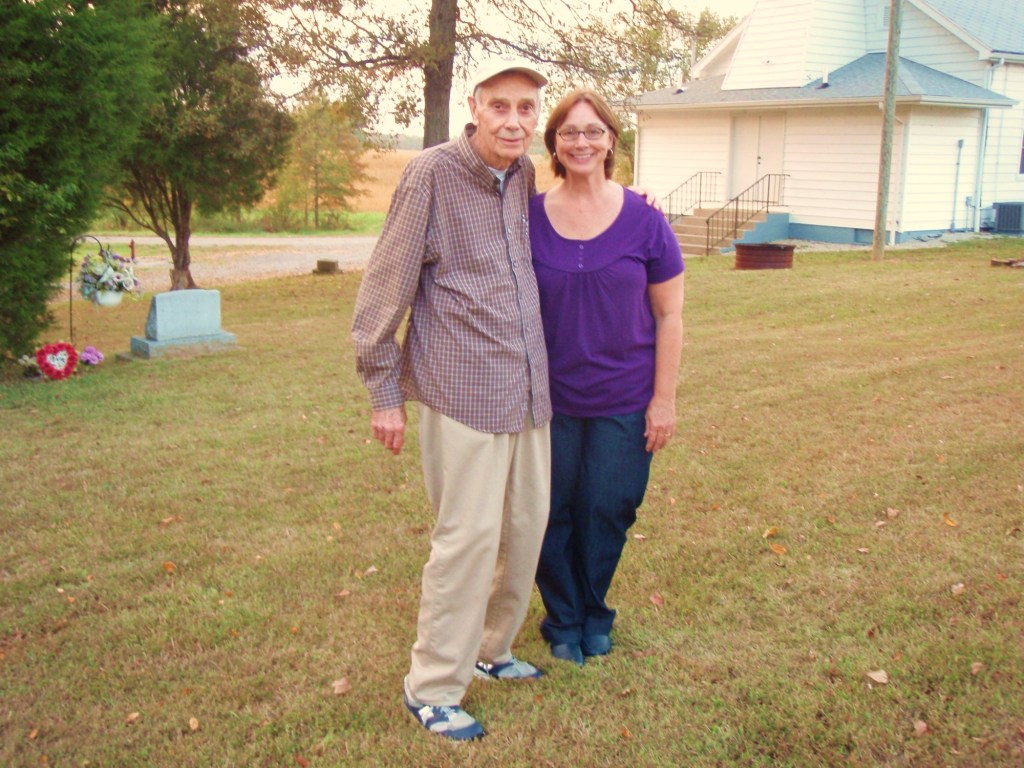
Dad and I at Plasters Grove cemetery where he was laid to rest

If you know of anyone who might benefit from a book like this, please let them know about it. If you would like to order it, it is available on Amazon. https://a.co/d/7BkDQ4R

Love you, Mom & Dad….

We miss you, Dad!

https://a.co/d/df5Hs0O

When I’m 64

Happy Birthday me! I am turning 64.

Me contemplating life at age 3 months

I have started humming this Beetles song lately: “Will you still need me, will you still feed me, when I’m 64.” I remember sitting in church when I was in Junior High school figuring out how old I would be in the year 2000—because that seemed so far in the future—like the Jetsons! I would be 40! Nearly ready for the nursing home, I thought at the time.

My Jr. High days

I recently went to the funeral of our pastor from my teenage years. What a legacy he had! Brother Delbert Wells (and his wife Beverly) were such a gift to me and so many more that God put in their path. He was like the pastor in the Jesus Revolution movie. In my hometown of Springfield, IL he opened his little church of Bethel to the hippies of the day. I was a Jr. hippie 🙂 ; old enough to wear bell bottoms and say, “Make love not war”, and have “Flower Power” written on my school notebooks and buy my blacklight posters from our local headshop called “Penny Lane”. Others in our church, and at our downtown Christian coffeehouse named LSD (for Lighter Side of Darkness), were “major” hippies just saved from the world of drugs and deep darkness. Brother and Sister Wells gave us respect, grace, a place in God’s Church and nurtured our individual callings. Their surrendered lives led us closer to God’s loving and perfect plan for our lives.

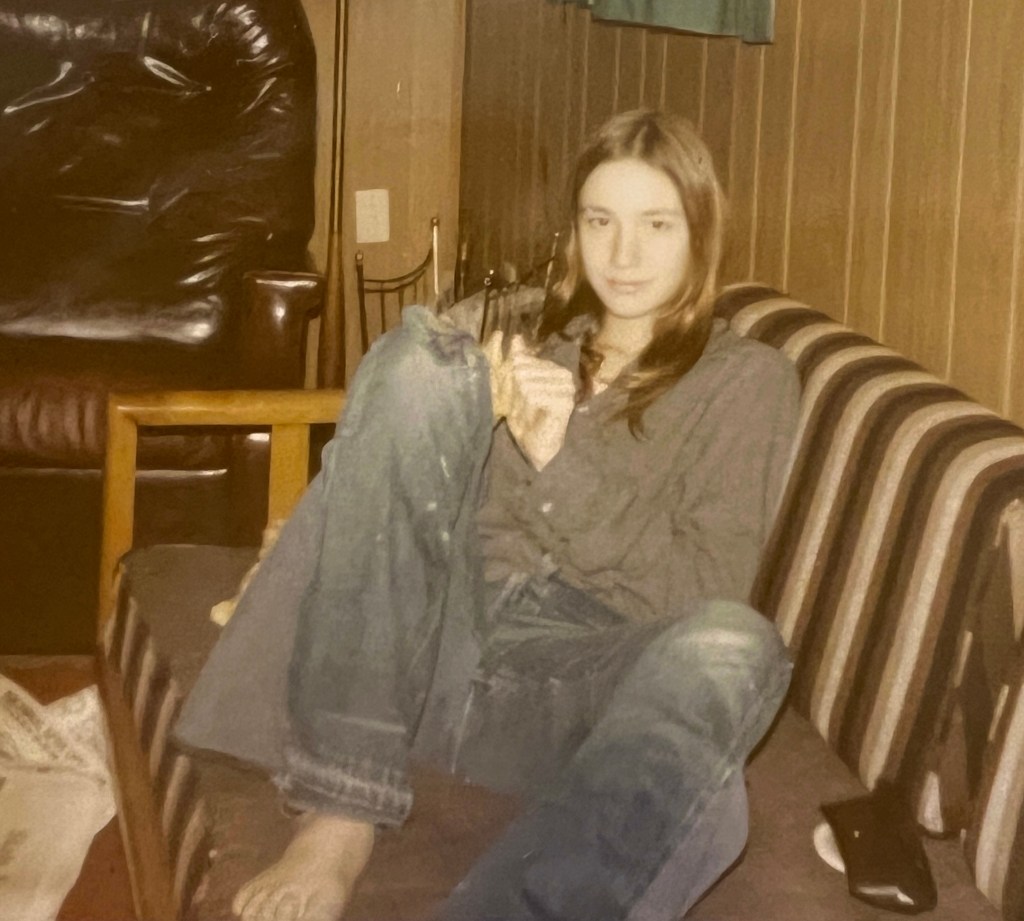
My early teen years

On the way home from Brother Wells’ funeral, I listened to The Great Divorce by C.S. Lewis. The following is my journal writing as I contemplated legacy and end of life, time passages, the final judgement and heaven:

“On the way down today, I listened to The Great Divorce. The last time I read it, I could barely understand the symbolism. Today it was rich. I thought of how clever of CS to illustrate all of us and thought that an evaluation of certain questions as the book is being read would be helpful: “Who are you in the story?” and “Which characters are your significant others in the story?” and “How can this work inform you on how to live and not live?”

I recall:

The inexplicable addiction to the Red Lizard of Lust which turned to a White Stallion of Desire after a difficult death to lust, bringing a rose brightness up the Mountain of Light.

The woman full of other-love that was really self-love in disguise, supposed love for son trumping love for God.  (Is this me?)

The theologian not wanting to let go of the questioning, the philosophizing, the open-endedness even after arrival in the surety of heaven. (Is this me?)

The teacher needing to teach for identity.

The painter wanting to paint heaven, but not to capture heaven’s radiance, but for his own reputation. (Is this me as poet/journaler/blogger/writer? Will I lay down my pen in heaven?)

The tragedian/disappearing dwarf chained and “their” wife—all glorious and exalted coming to them humbly beginning with apology but with the challenge to give up a quest for pity which only squelches joy.

The wife who always wanted her husband just to dominate/control/chide him.

George McDonald as CS’ guide—mentor—like Virgil & Beatrice for Dante.

The solidity of heavenly things and transparency of our un-surrendered selves.

Help me not to love learning most, but to love learning about YOU! Help me to lay down my search once you are found. Help me to lay down my “Religion” once I am in Your arms—Your sight—Your presence fully and eternally.

Help me now, Lord, to live a life so pleasing that I will have let go of all of “me” that is not under your Lordship.  Help me to examen—examine—and give me courage to let go—to hold on only to You and Your ways and Your will and desire for You!!  I know that is where peace is and truth and life and Light.  That is my only place of True Safety—True Love.”

And so, now that I’m turning 64, I continue praying this journal prayer. I pray that I will live well. I pray that I will serve well. I pray that I will age well. I pray that I will end well!

…Pray this along with me.

A Good Friday Reflection

As the rain comes down today and I see my packages of seeds awaiting the earth of my garden, being prepared for the death of a seed in the soil, to bring up the resurrection of something new and green–with the un-watering of the sky above; I see the correlation of Jesus’ death on the cross–to bring about a resurrection of hope and redemption offered to us all.

Today our church had a good Friday service in which we contemplate the last 7 words of Christ from the cross. I was asked to participate and I chose Jesus’ words “I thirst” as the focus of my sharing:

I Thirst

By Loretta Goddard, Good Friday 2019

“Jesus, seeing that everything had been completed so that the Scripture record might also be complete, then said, ‘I’m thirsty.’ A jug of sour wine was standing by, someone put a sponge soaked with wine on a javelin and lifted it to his mouth.” John 19:28, 29 (The Msg)

I have been with three people as they died. One, we were trying to keep alive. I gave CPR to him as we awaited an ambulance. The other two were in hospice—one a friend, the other, my father. There were distinct differences in the death we were fighting and the others we were resigned to accept—even welcome.

Jesus’ death was one of acceptance at this point. Those who had eyes to see would even have welcomed it—for it was bringing about their way to redemption! To the Romans and most Jews at the crucifixion, Jesus was the “Dead Man Walking”* —the death row inmate already in the electric chair. To the disciples, the dismayed disciples, it was a horror they were resigned to accept. To Jesus it was the completion of something that began in the garden of Eden when Love, Who wouldn’t let go, began to formulate this plan. Moses wrote about it—the serpent’s head crushed by this woman’s seed* ; as did David, in Psalm 69*, prophesying of this very moment when Jesus would thirst and be offered sour wine.

When I sat with my friend and my father, as they lay dying, I observed that death is:
• an un-breath-ing and
• an un-water-ing.

When we fight death, we start IV lines and push fluids—we know that dehydration is part of dying. When we receive death, ice chips only are offered—or very small sips. Every breath “un-waters.” We offer moistened cotton swabs to cracked lips.

So here on the cross, Living Water was being poured out.

Just a few years prior to this, Jesus sat near a well and told a Samaritan woman: “If you knew the generosity of God and who I am, you would be asking me for a drink, and I would give you fresh, living water.” He said, “Everyone who drinks this water will get thirsty again. Anyone who drinks the water I give will never thirst—not ever. The water I give will be an artesian spring within, gushing fountains of endless life.”*

So now, on the cross, the Giver of Living Water Himself is thirsting. He is dry—parched—poured out—in order to quench our thirst. To bring us the living, gushing waters of saving grace, He is being un-watered with every breath.

Since this “Rock of Ages” gave water for the Israelites in the wilderness* —
Since this God-baby was birthed from amniotic fluid in a stable—
Since coming up from the waters of His baptism* —
Since that day with the woman at the watering well—
Since the dehydrated, un-watered, bleeding woman’s touch of the hem of His garment*-Since the moisture of a kiss of betrayal from Judas to His cheek—
Living, Loving, Water was being poured out.

This Word of God who formed the earth “out of water and through water,”* now allowed Himself, to be un-watered.
Life Himself became “Dead Man Walking.”
The Healer, the Great Physician, was passive. This is the “passion” of the Christ*:                 He became a patient—a hospice patient—submitting to death —
Allowing the un-breath-ing, the un-water-ing, of His death;
to bring us—
to offer us—
fresh living water.

Jesus said, “I thirst” so that we, can be filled with poured out Living Water, and “will never thirst—not ever.”
_________________________________________________________________________________________

*Footnotes:
1. Dead man walking definition: a condemned man walking from his prison cell to a place of execution. https://www.collinsdictionary.com/us/dictionary/english/dead-man-walking
2. Gen 3:15
3. “They gave me poison for food and for my thirst they gave me sour wine to drink.” Ps. 69:2
4. John 4:10 Message, John 4:13/14 Message, italics mine
5. “and all drank the same spiritual drink. For they drank from the spiritual Rock that followed them and the Rock was Christ.” 1 Cor. 10:4
6. Matthew 3:16
7. Matthew 9:20
8. “…the heavens existed long ago, and the earth was formed out of water and through water by the word of God….” 2 Peter 3:5b.
9. “The English word passion takes it root in the Latin, passio, meaning passivity, and that’s its real connotation here. The word “patient” also derives from this. Hence what the Passion narratives describe is Jesus’ passivity, his becoming a “patient”. He gives his death to us through his passivity, just as he had previously given his life to us through his activity.” http://ronrolheiser.com/the-passion-of-jesus/

Our Wabi-sabi Shed

img_7730

When we first acquired our Jessamine farmstead, the house, shed, and fences could all have been marketed as being in “as is” condition.  This is typically realtor-speak meaning “somewhat run down and probably lots of things will need to be repaired or replaced.”

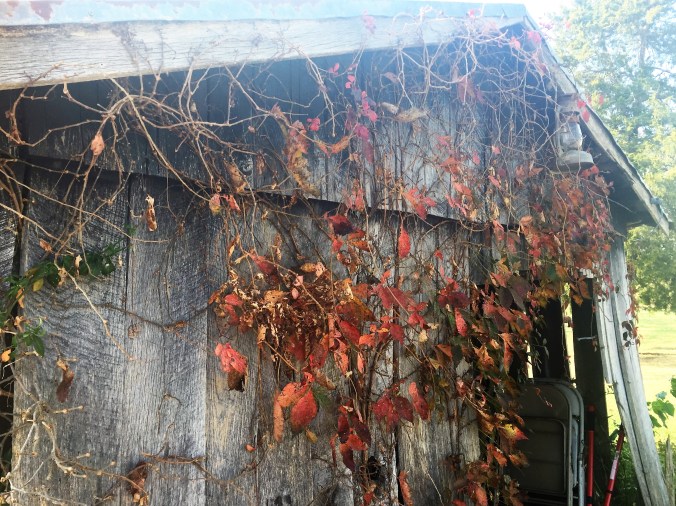
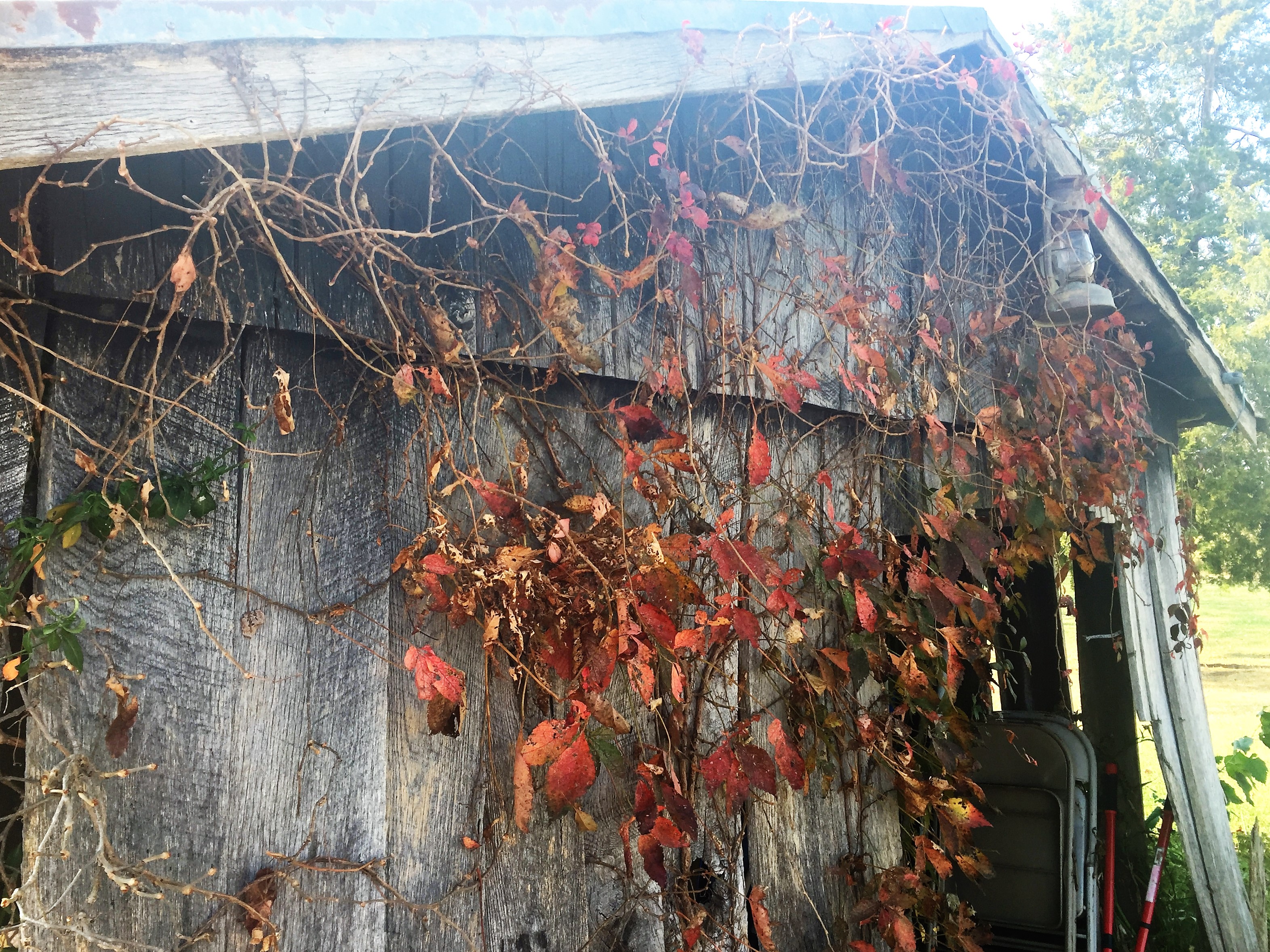
We were not daunted.  Our thrill was with the land and location. When friends and family came to visit they often commented on the shack–a leaning structure with bowed out barn wood on the sides and two small low-slung entrances on front and side.  Indeed we discovered in the first winter that snow was easily blown through the boards so that its contents were only slightly protected from the elements.

All this is reality and yet I’m enchanted by the beauty of this little deteriorating historic structure in our backyard.  It serves as trellis to vines of colored leaves in the fall and supports pink peonies likely planted about the time of its construction every spring. In the winter it shelters stacks of wood that Hule splits in just the right size for our wood stove and in the summer it holds our mowers, garden tools, and a bird nest or two.

A few years ago I was introduced to a series of words that are conjectured by some as  “untranslatable” from other languages into English.  So many of these words intrigue me and challenge me to appreciate the cultures that nurtured and created them.  One such word is wabi-sabi from the Japanese.  Wabi-sabi is said to refer to an appreciation of a beauty inherent in objects of transience and a respect of imperfection and admiration toward an essentially natural cycle of decay or deterioration.  While I believe that one must study a culture more thoroughly to truly know the full meaning of such words, what I read of this concept reminds me of how I feel about our little lean-to.  In fact I have now named it our wabi-sabi shed.

Maybe it is our stage or season of life that gives me this perspective.  In my 2nd half of life I am choosing to focus on the value of an unfading beauty of the inner spirit rather than the fleeting beauty of my outer form.  A few years ago when at the beach I looked down at my hands and hardly recognized them…age spots, crinkled skin, protruding veins…these were not the hands of my youth.

When I was dating my Mississippi boyfriend (later to become my husband, Hule) and he held my hand for the first time he said, “Wooo!  Your skin is softer than a catfish’s belly!”  At first, this Illinois girl wondered if that was a slam, but pretty quickly I discovered it was indeed high praise. Remembering that, I considered the history that each scar and spot and rough patch represented.  A new perspective valued my hands’ natural decay to reveal a sort of beauty.

With this perspective, which now I might call a wabi-sabi perspective, I wrote this poem to my husband:

Take my hand, my love

“Softer than a catfish’s belly!”

Held

Caressed

Joined

Bejeweled

Writing, underlining, studying,

Washing dishes and laundry

Changing diapers

Planting herbs

Days on the beach

Sun-leathered

Still held–

but now

Constellations of pigment

Calloused from work

And years from wearing your ring

I still choose to put my hand in yours