Shorty’s Chair

“Only take care, and keep your soul diligently, lest you forget the things that your eyes have seen, and lest they depart from your heart all the days of your life. Make them known to your children and your children’s children.” Deuteronomy 4:9 ESV

It will soon be Thanksgiving and many of us will gather in homes across the country, making way for hospitality, for extras to feast with us, telling stories of the past, reminiscing, taking time to thank the Lord for family, food, and all life’s blessings past, present and future. To celebrate, we use all available chairs around our dining tables—even the less comfortable ones. I have a story about one such chair at our house.

There are a few things that tether our Jessamine County Kentucky farm with my Plasters family’s farm lying 278 miles westward near Cave Township in Franklin County, Illinois. One fact I just discovered as I researched this writing is that both farms are in the 37th Parallel North, which is referred to by some as “The Paranormal Highway.”

But the connector that prompted this telling is one that has traversed the path eastward from Illinois to Kentucky. We call it “Shorty’s Chair.” It is a plain small ladderback wooden chair with a woven seat. There is a mysterious dip in the top slat of the chair. Dad told me it is where his uncle Shorty would sit in the chair backwards, one leg on each side straddling the seat, in front of the potbellied wood stove in the old Illinois farmhouse, as Shorty’s chin (or mouth?) created that hollow top of the chair. (I have sat on it to test the theory, and it is possible.)
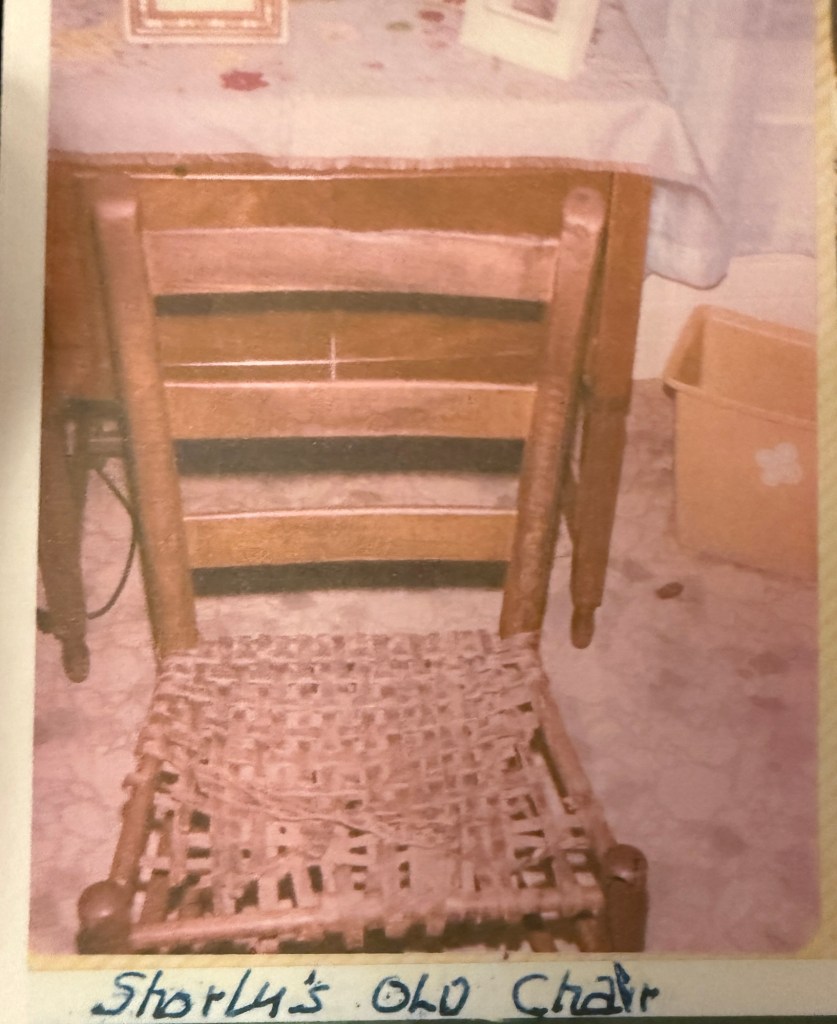
 

Shorty’s old chair in the Illinois farmhouse

Shorty was a lifelong bachelor and World War 1 veteran. His real name was Elmus Plasters and he cared for his mother, Malissia, my great grandmother, until her death in 1963.
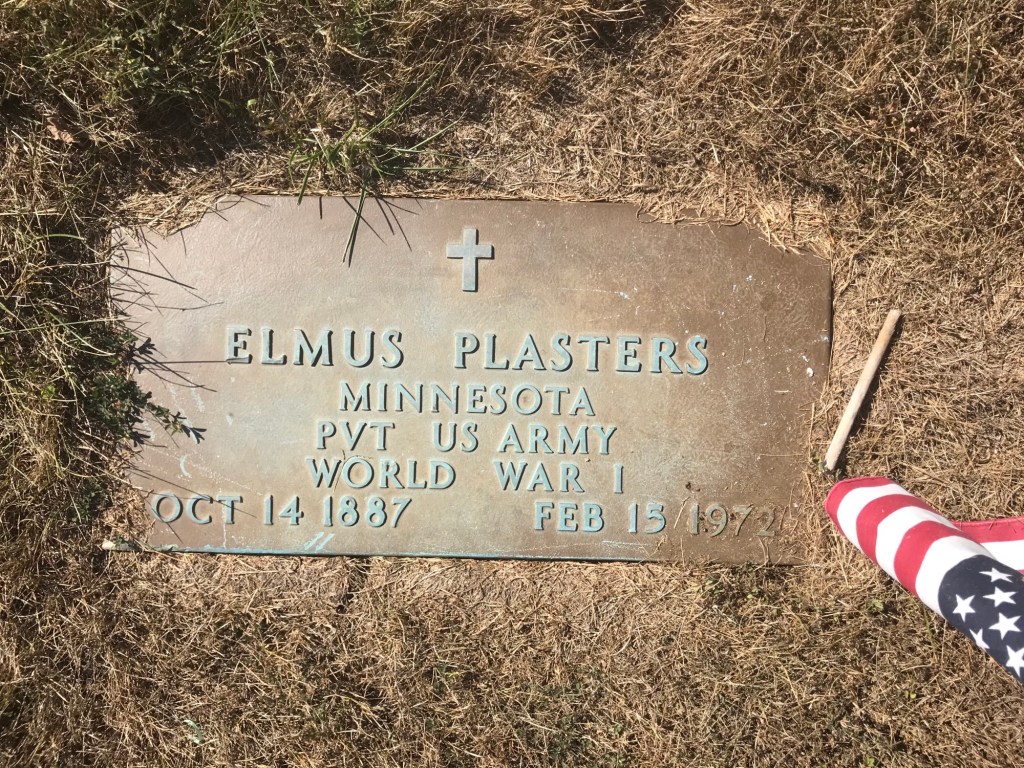
Shorty’s military marker

Her tombstone says she was born in 1864 and died in 1963. We have a newspaper clipping celebrating her 100th birthday…maybe our family gets our dates mixed up sometimes :)?
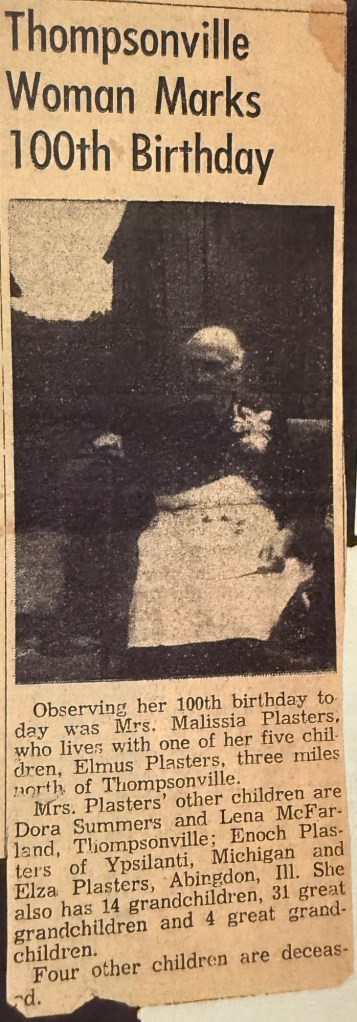
The only encounter I remember with Malissia was my first recollected introduction to the Illinois farmstead. As I look at the dates, I would have only been about 3 ½ years old, but it etched a memory in me that is still present; likely because I was a bit terrified. My Dad and I entered through one of the two front doors from the front porch. The house was old and smelled strange to me. Uncle Shorty was sitting by the fire and there was a bed over in the corner of the room. On it was a lady under a lump of covers. I could discern no face, but I heard her turning back and forth. She was moaning. Dad told me later that he remembered that his grandma would moan in pain and Shorty would have to say, “Ma, we don’t have money to buy any more aspirin.” I recall the hand and presence of my father as the only discernably familiar spot in that home. I was as equally troubled by the presence of a bed in a living room as I was with the faceless moaning woman in the corner. And Shorty was strange too. From his small chair his face was nearer to my face as any grownup man that I remembered meeting. Also, his southern, nasal country talk was alien to my little toddler ears.
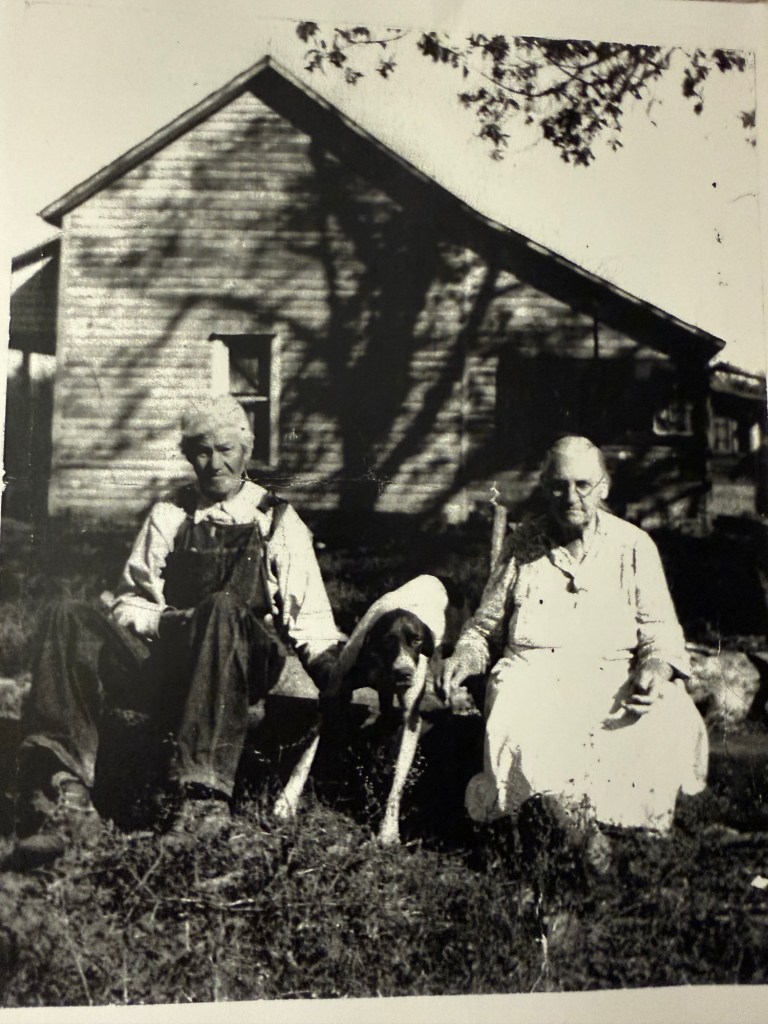
Malissia and Robert with their dog Nell in the side yard of the old Illinois farmhouse, likely one of them is sitting in “Shorty’s” chair

I must have said I was thirsty and I was escorted into the kitchen where there was a metal pan sitting on a wooden stool with a carved-out gourd on it. That was the “common gourd.” Everyone sipped from it like the common chalice in an Anglican communion line. I learned later that they had dipped that water from a well out back. Indeed, as I look back, it seemed like a 37th Parallel Highway moment.

Shorty lived on in the family farmhouse until the early 1970’s. When Uncle Shorty got sick and had to go to a hospital my dad arranged to buy the family farm as a summer place for us; part of the money was to help pay for Shorty’s hospital bills. Dad’s memories were there and, in the house just around the corner, and one down the street. Uncles and aunts had dotted that small area of land for years. The earliest ancestor, John Plasters, obtained the acreage in the 1850’s as payment for his service in the military. The subsequent family line had farmed the acreage until our purchase of it.
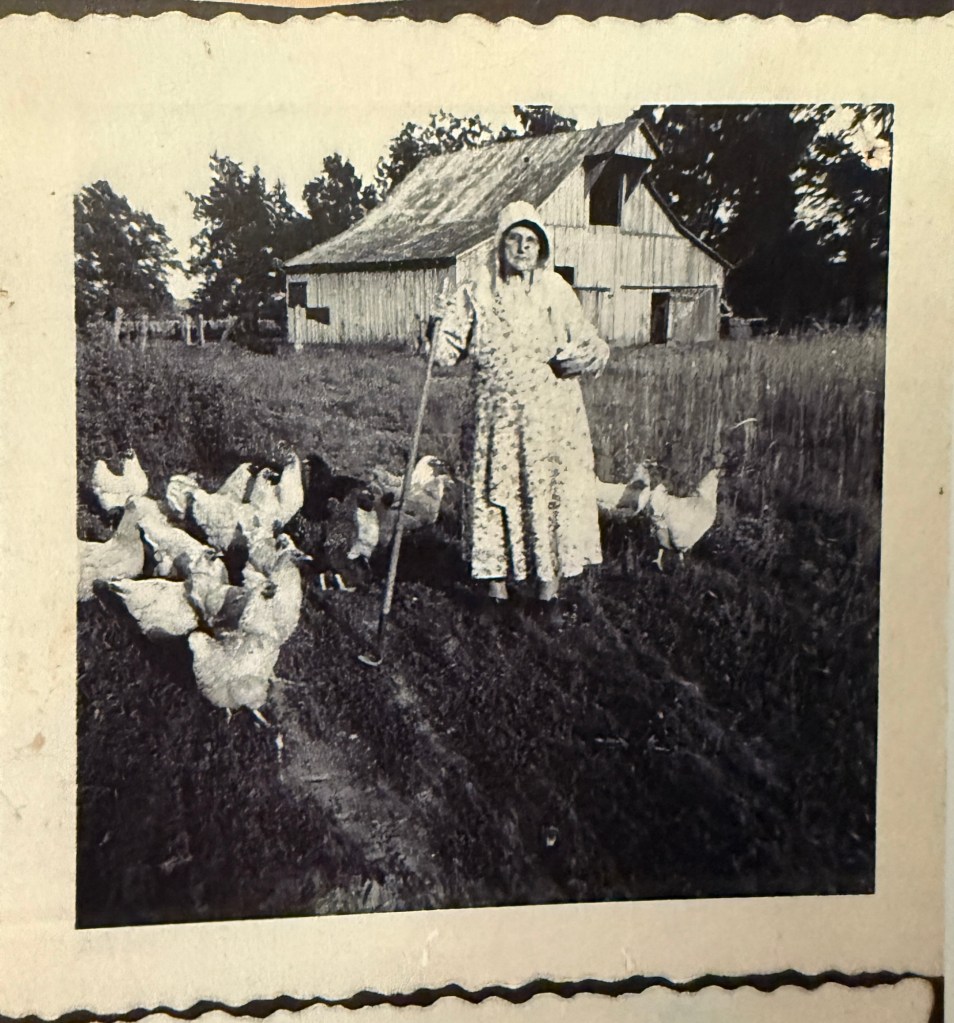
Great Grandma Malissia with her chickens at the Illinois farm

When we got the farmhouse Mom and Dad worked hard to give it a semblance of new life, but a few artifacts remained—one of them was Shorty’s chair. We summered and weekended there as a family. That chair was witness to my teenage vacations and to Christmas Eve 1977 when I brought my Mississippi boyfriend, Hule, there and he got down on his knees and proposed to me. It also stood sentry in the living room when we returned six months later to spend a portion of our honeymoon.
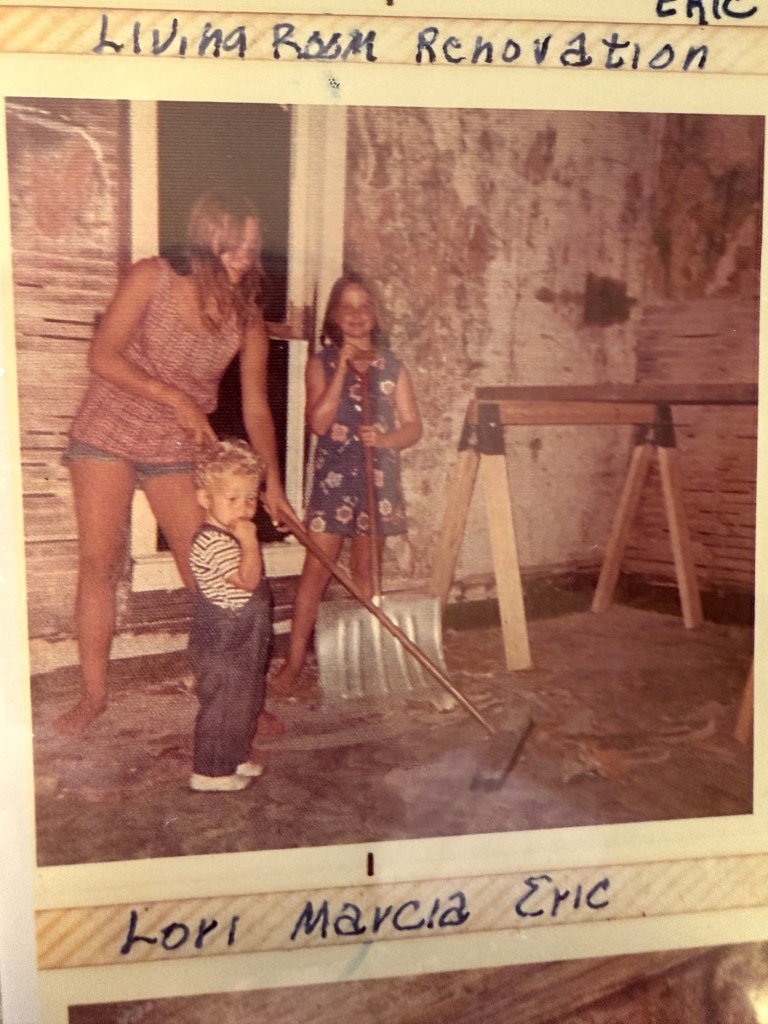
Renovating the Illinois farmhouse living room: Me (“Lori”) with my younger sister Marcia and little brother Eric. The corner you see is where Great Grandma Malissia’s bed was.

There came a time when that house disintegrated enough that it had to be torn down. We still have the farm, and a different house stands where it stood. My dad salvaged Shorty’s chair as one of his precious heirlooms. He brought it up to our Springfield, IL home. Dad’s dream was to live full-time in a small Thoreauesque cabin at the farm with only a fire, a chair, and one hook for his clothing. Shorty’s chair represented that never-realized dream.
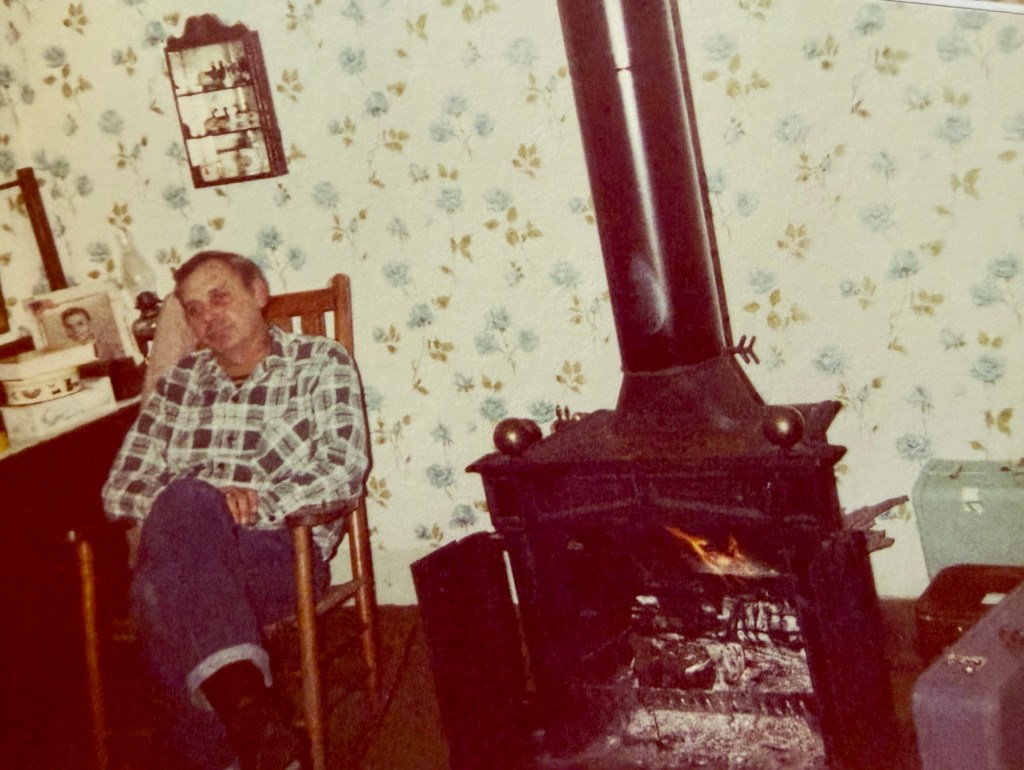
My dad relaxing by the wood-stove in the Illinois farmhouse living room after the remodel

For Dad’s gift one year Mom arranged for the seat of Shorty’s chair to be re-woven because it was quite worn. Some years later, as my mom didn’t have much room for it in her house, she gifted it to me. It now sits in the modest home of our Jessamine farm. It is used mostly when extra guests come and we run out of the upholstered, more comfortable seating. But it sits there as an icon—full of symbol and meaning and memory, linking our past to our present and future on this rural landscape situated in the shared 37th Parallel North.
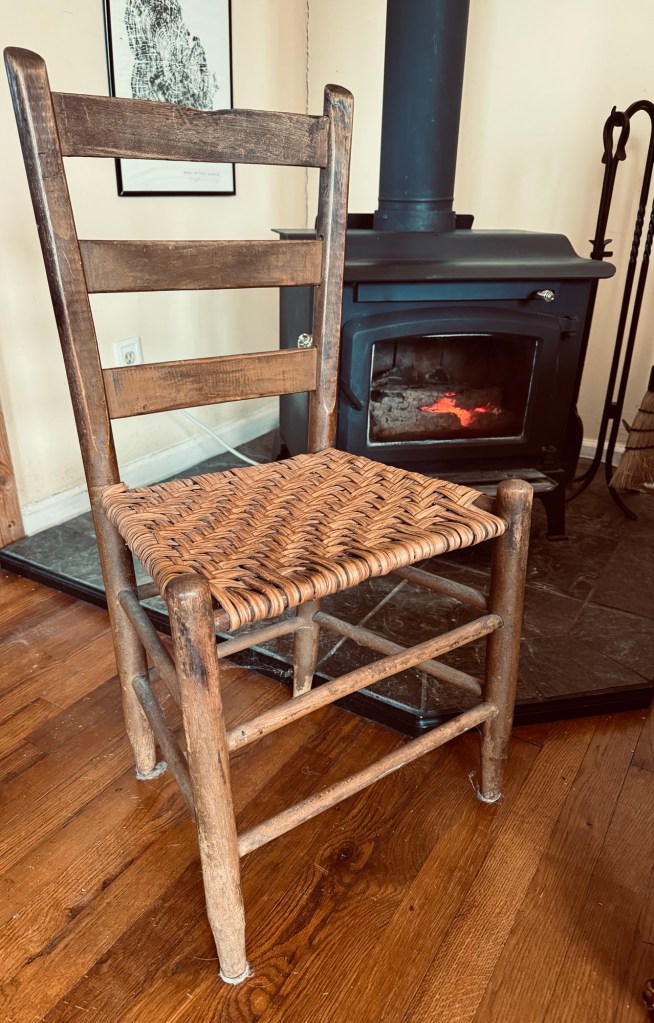
Shorty’s chair in our Kentucky farm living room by our wood-stove

+++++++++++++++++++++++++++++++++++++++

“I remember the days of old; I meditate on all that you have done; I ponder the work of your hands.” Psalm 143:5 ESV
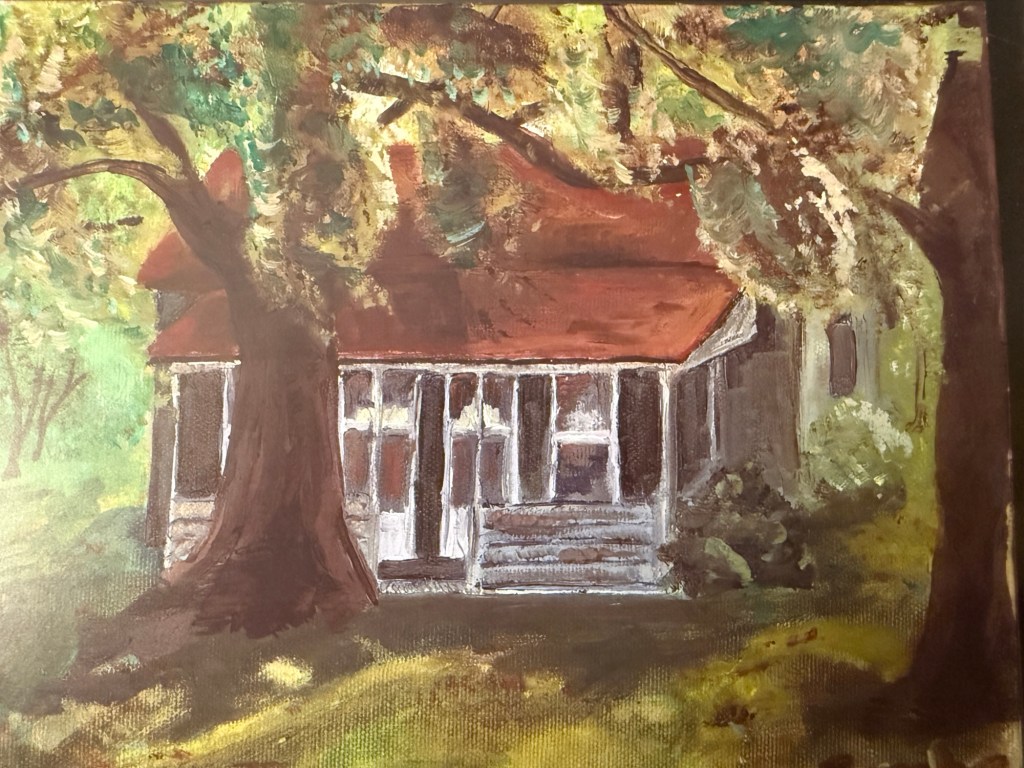
 

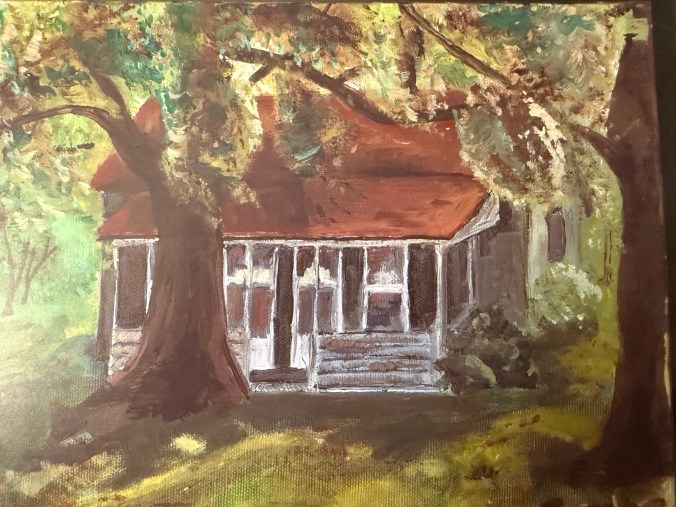
The old Illinois farmhouse painted by my daughter Sarah Jo Goddard

My new book

September is the month of both my mother and father’s birthdays. I honor them with the announcement of the publication of a book I wrote about a chapter in our family’s life: My Fading Father: An End of Life journey.

Dad walking me down the aisle

This is the story of how our family lived together with Dad in his last years and our final earthly goodbye. It was compiled from diaries I wrote during this season. It is a book for all of us — caregivers, care receivers, grievers— all of us who will face our decline and death, or that of a loved one. So, the story is for everybody. Dad’s end of life journey came with cognitive decline, likely Alzheimer’s, and that presented a special challenge and opportunity for us.

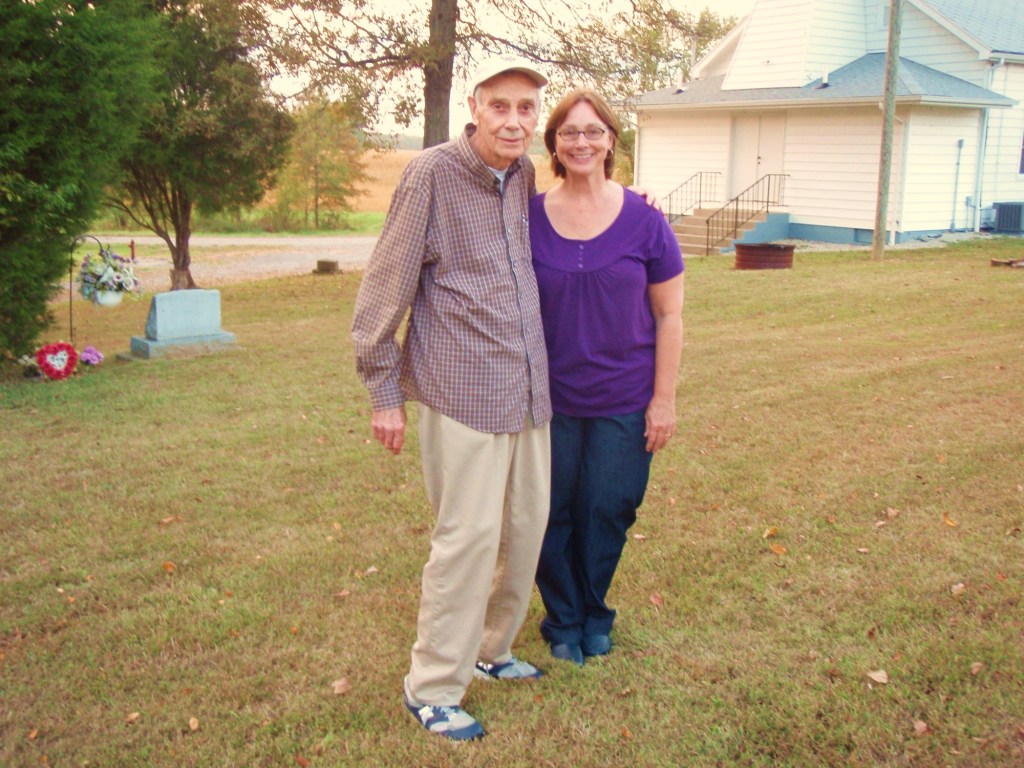
Dad and I at Plasters Grove cemetery where he was laid to rest

If you know of anyone who might benefit from a book like this, please let them know about it. If you would like to order it, it is available on Amazon. https://a.co/d/7BkDQ4R

Love you, Mom & Dad….

We miss you, Dad!

https://a.co/d/df5Hs0O

Childbirth

I find myself praying today for a friend’s imminent childbirth. Giving birth is such a thin place, where we join in creation and fall simultaneously. It’s a miraculous space: liminal—in-between. The father, mother, and child, pass through a limen—a doorway—from unknown to known and from known to unknown. There is a change in “I am-ness” to each participant—even for every sibling and every grandparent.

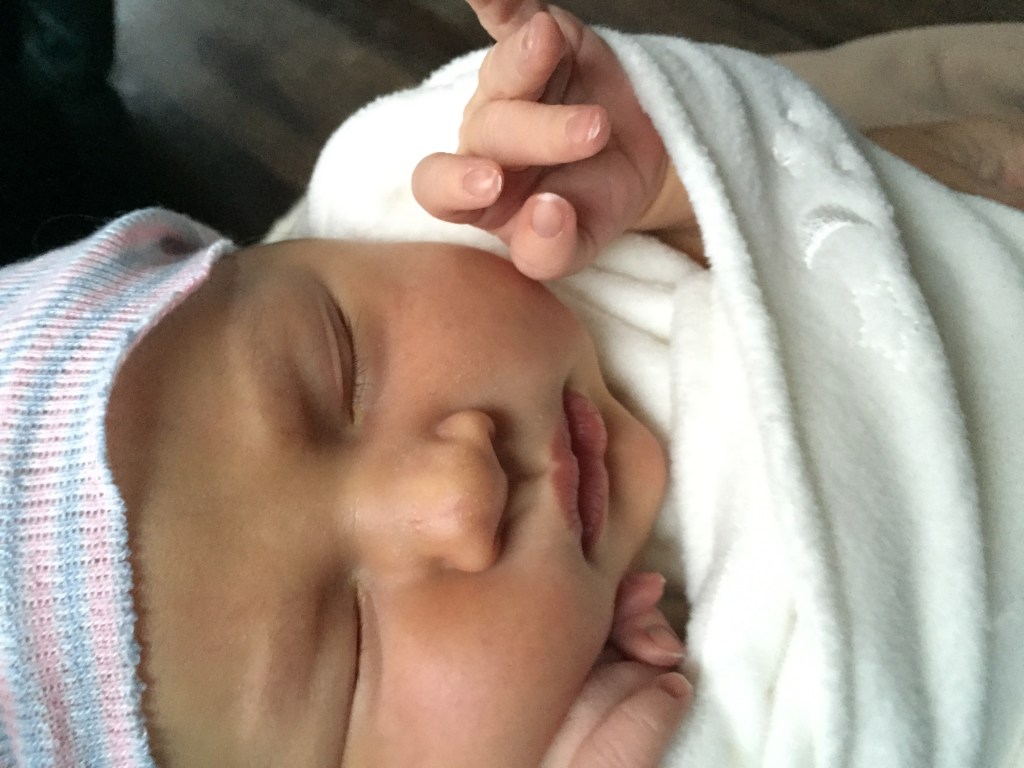
When my first grandchild was born, I stood at the head of the bed and experienced the miracle unfolding. I saw my dear daughter rock in pain with contractions and reach in joy for her new writhing, crying, little human-gift. I observed the furrowed brow, outstretched hand, and deep concern of my son-in-law at bedside; then the outrageous excitement of seeing the emergence from dark to light of his firstborn, Hazel—with a holy hush followed by one last push.

When my second grandchild, Julian, was born, I stayed at home with Hazel. It was a different kind of vigil—from far away. It was hard not being present and I was grateful to God and His sure presence with me and with my daughter simultaneously, and His constant bent-ear, listening for our intercessions and supplications. I wrestled with the thought that my daughter would need to struggle with pain, maybe blood, and difficulty for this birth, and I recalled the reason that the Bible gives to aid in answering all, no, most, of my questions.

The night before Julian’s entrance, I birthed the following thoughts. I pray they might help you or your loved one in grappling with, and entering past the veil into, this angel-filled, Trinity-immersed, Cloud of unknowing which we encounter at the emergence of every new life…if we have eyes to see.

Julian’s Exodus

And now

As we turn toward this event

This liminal passage—

A new life liminal passage—

We remember that You Lord, are a Parent

A Father and “Mother” to a boy, Adam and girl, Eve

Formed long ago in the womb of your garden,

“born” into your household.

And even before that

(really not before, but always)

Your only Son—begotten, not made—of one Being with You.


But there came a fall—

Jack and Jill tumbled

And pain in childbirth came,

Not the original plan,

But a consequence.


So now we embark on a new in-between space

One that, despite our knowledge and advancements, will likely bring some

Pain

Squeezing

Peril

Need

Perhaps groaning.


“Like the pains of childbirth,” we often say:

A groaning of earth in an Eve-like form.


We come here through remembering also that you overshadowed blessed Mary—

Dripping in Eve-ness—

To bring hope and healing

To bring back full joy and to ease the pain of Eden’s losses.


And with your Husband eyes[i]

And Father eyes

And Maternal eyes[ii]

You oversaw it all:

The angelic visitation,

The miraculous implantation,

The weaving together of God and man

Who would be Adam 2

Adam Jr.

Who would be Your precious, deeply-loved Son.


You watched the journey,

The uprooting,

The placenta pulling away

In the birthing room

That was a stable.

You sent shepherds and wise men for the baby shower.

You watched as the wet, crying and cooing boy emerged from the nine-month hiddenness.

You sent angels to say,

“Do not be afraid!”

You said, “My peace I give to you.”

And, “I will never leave you or forsake you.”


And so we pray to You—

Who are a Father

And a Son

And have a maternal heart

And are a great Physician

And a Summoner of angels.


We look to You

To bring the Light –Da la Luz!

Of Your presence

Your face

Your touch

Your attention.


We ask for safety for all during labor and journey through the underwater tangles, the unknown, the Red Sea’s partings, little Julian’s exodus into this world.


We look to You.

We trust in Your great love,

In Your deep knowing—conocimiento—that is owned by a Parent’s heart and soul and body.


In Your Son Jesus’, name,

Amen


[i] Jesus is the bridegroom and the church is His bride.

[ii] Many places in the Bible God is portrayed as having motherly affection and care:

God: “As a mother comforts her child, so I will comfort you; you shall be comforted in Jerusalem.” Is. 66:13

God: “Can a woman forget her nursing child, or show no compassion for the child of her womb?  Even these may forget, yet I will not forget you.” Is. 49:15

God: “For a long time I have held my peace, I have kept myself still and restrained myself, now I will cry out like a woman in labor, I will gasp and pant.”  Is. 42:14

Jesus said, “How often have I desired to gather your children together as a hen gathers her brood under her wings, and you were not willing.” Matt. 23:37 and Luke 13:34