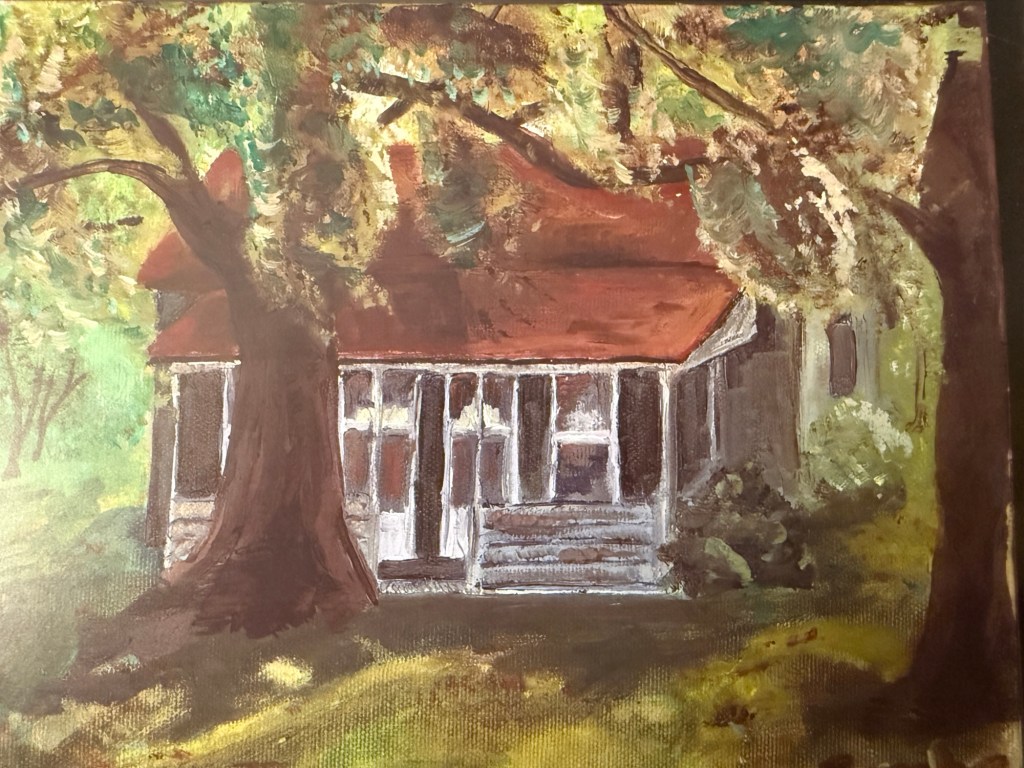
“Only take care, and keep your soul diligently, lest you forget the things that your eyes have seen, and lest they depart from your heart all the days of your life. Make them known to your children and your children’s children.” Deuteronomy 4:9 ESV
It will soon be Thanksgiving and many of us will gather in homes across the country, making way for hospitality, for extras to feast with us, telling stories of the past, reminiscing, taking time to thank the Lord for family, food, and all life’s blessings past, present and future. To celebrate, we use all available chairs around our dining tables—even the less comfortable ones. I have a story about one such chair at our house.
There are a few things that tether our Jessamine County Kentucky farm with my Plasters family’s farm lying 278 miles westward near Cave Township in Franklin County, Illinois. One fact I just discovered as I researched this writing is that both farms are in the 37th Parallel North, which is referred to by some as “The Paranormal Highway.”
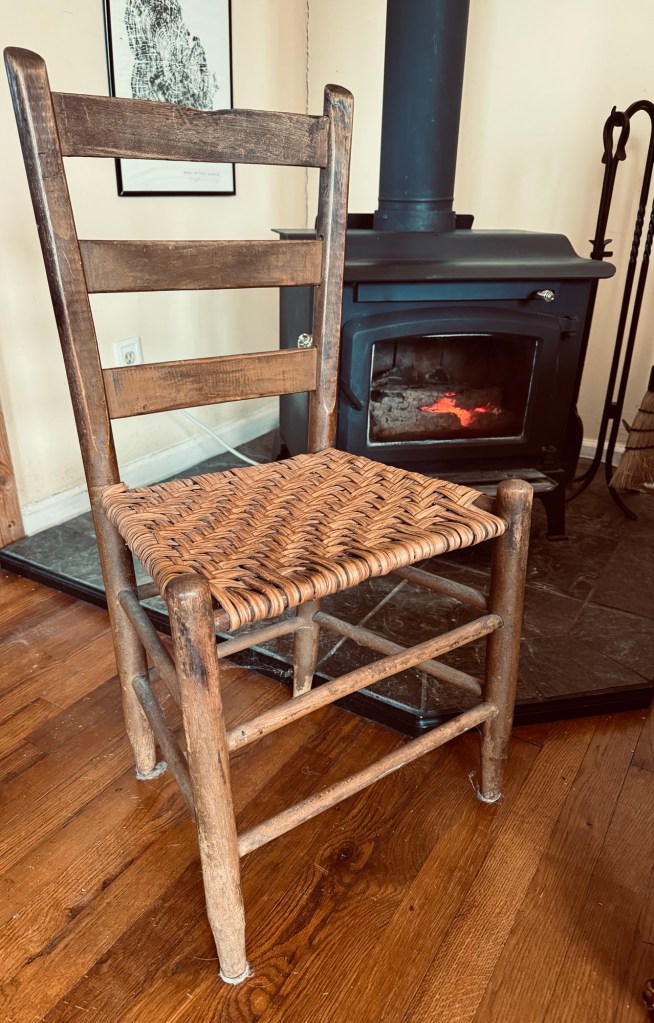
But the connector that prompted this telling is one that has traversed the path eastward from Illinois to Kentucky. We call it “Shorty’s Chair.” It is a plain small ladderback wooden chair with a woven seat. There is a mysterious dip in the top slat of the chair. Dad told me it is where his uncle Shorty would sit in the chair backwards, one leg on each side straddling the seat, in front of the potbellied wood stove in the old Illinois farmhouse, as Shorty’s chin (or mouth?) created that hollow top of the chair. (I have sat on it to test the theory, and it is possible.)
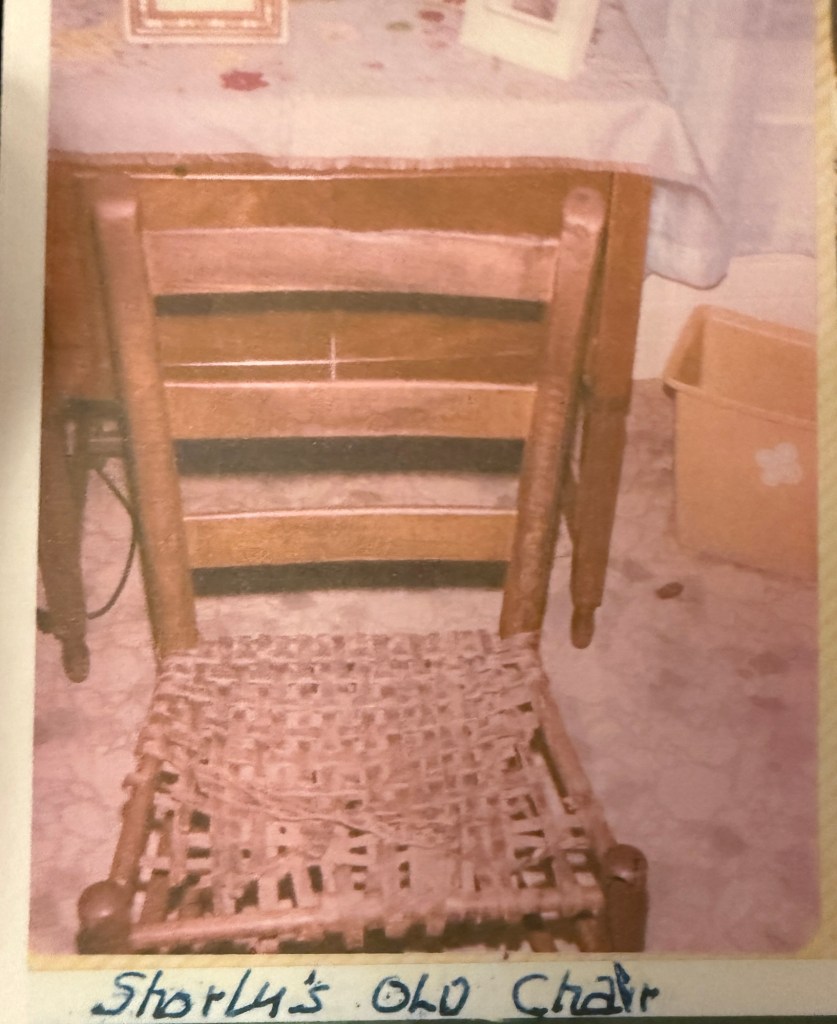
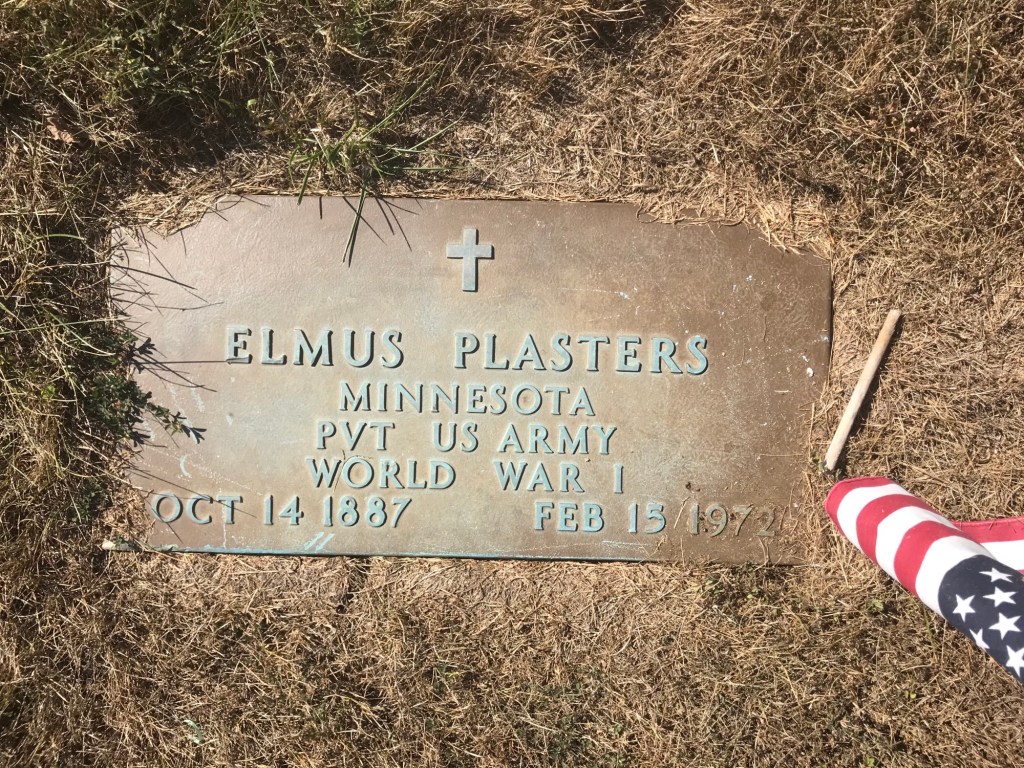
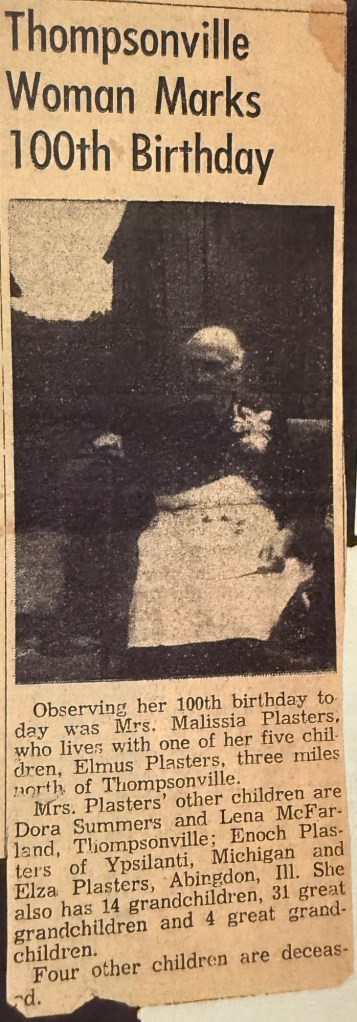
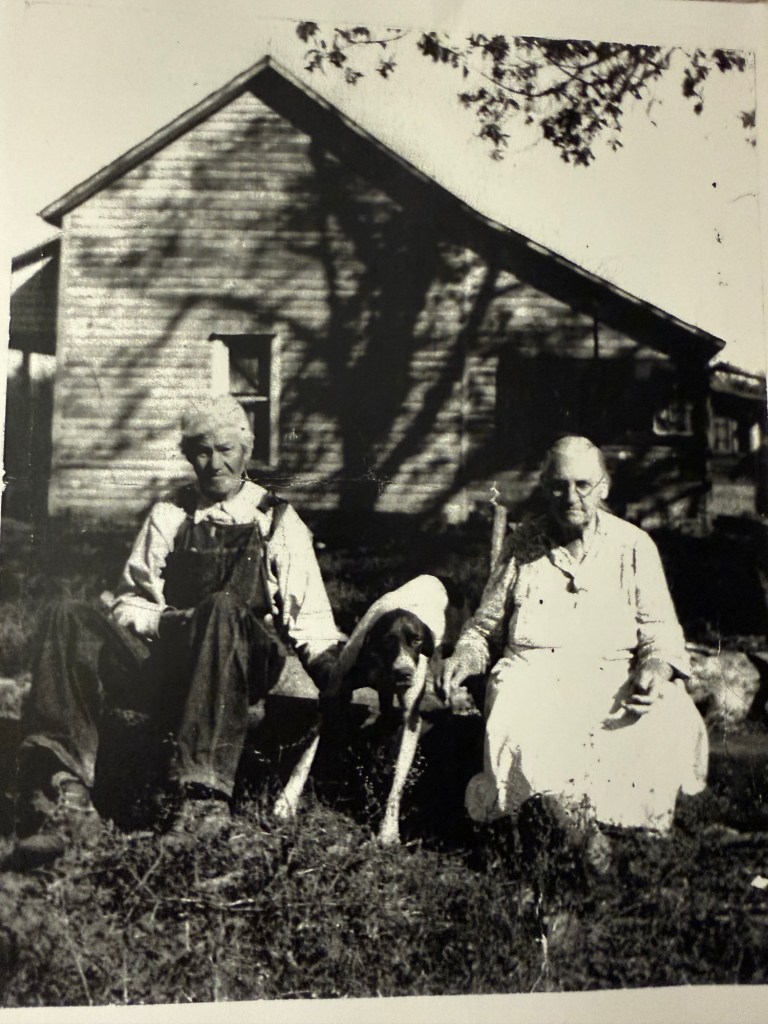
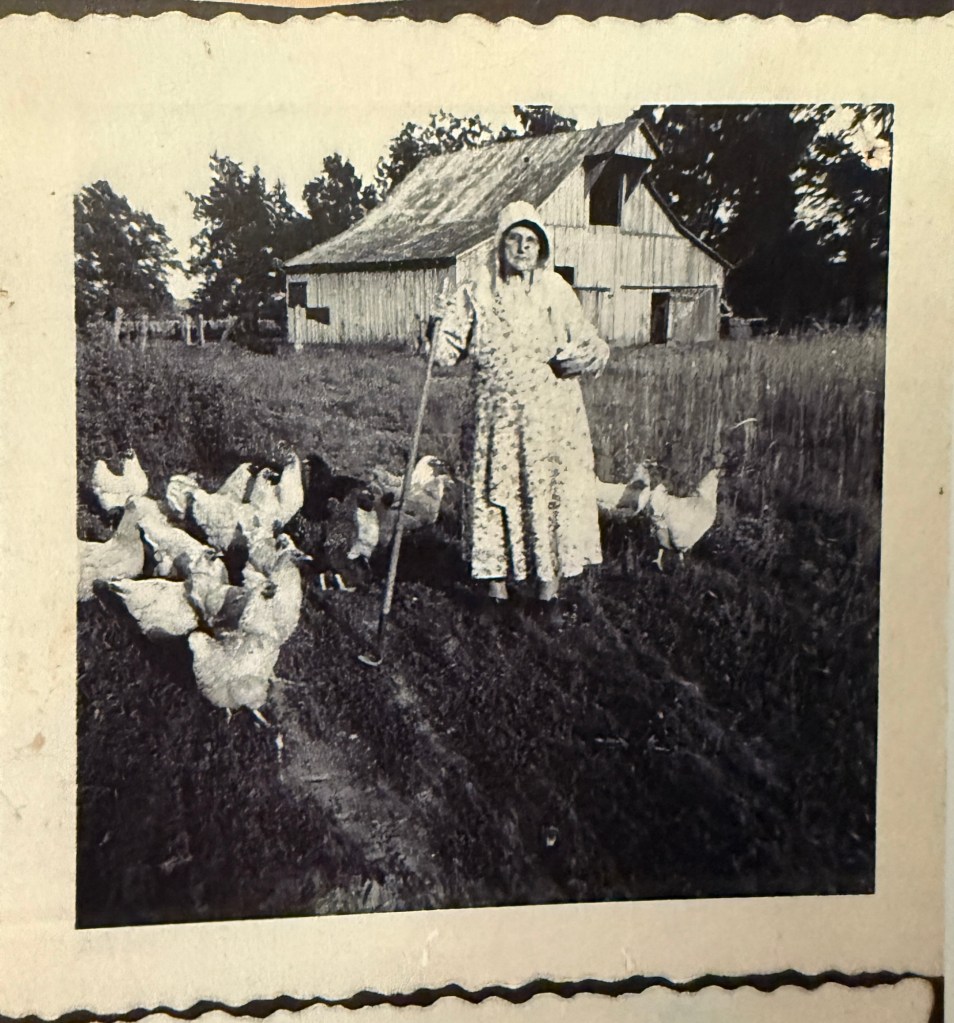
Shorty was a lifelong bachelor and World War 1 veteran. His real name was Elmus Plasters and he cared for his mother, Malissia, my great grandmother, until her death in 1963.
Her tombstone says she was born in 1864 and died in 1963. We have a newspaper clipping celebrating her 100th birthday…maybe our family gets our dates mixed up sometimes :)?
The only encounter I remember with Malissia was my first recollected introduction to the Illinois farmstead. As I look at the dates, I would have only been about 3 ½ years old, but it etched a memory in me that is still present; likely because I was a bit terrified. My Dad and I entered through one of the two front doors from the front porch. The house was old and smelled strange to me. Uncle Shorty was sitting by the fire and there was a bed over in the corner of the room. On it was a lady under a lump of covers. I could discern no face, but I heard her turning back and forth. She was moaning. Dad told me later that he remembered that his grandma would moan in pain and Shorty would have to say, “Ma, we don’t have money to buy any more aspirin.” I recall the hand and presence of my father as the only discernably familiar spot in that home. I was as equally troubled by the presence of a bed in a living room as I was with the faceless moaning woman in the corner. And Shorty was strange too. From his small chair his face was nearer to my face as any grownup man that I remembered meeting. Also, his southern, nasal country talk was alien to my little toddler ears.
I must have said I was thirsty and I was escorted into the kitchen where there was a metal pan sitting on a wooden stool with a carved-out gourd on it. That was the “common gourd.” Everyone sipped from it like the common chalice in an Anglican communion line. I learned later that they had dipped that water from a well out back. Indeed, as I look back, it seemed like a 37th Parallel Highway moment.
Shorty lived on in the family farmhouse until the early 1970’s. When Uncle Shorty got sick and had to go to a hospital my dad arranged to buy the family farm as a summer place for us; part of the money was to help pay for Shorty’s hospital bills. Dad’s memories were there and, in the house just around the corner, and one down the street. Uncles and aunts had dotted that small area of land for years. The earliest ancestor, John Plasters, obtained the acreage in the 1850’s as payment for his service in the military. The subsequent family line had farmed the acreage until our purchase of it.
When we got the farmhouse Mom and Dad worked hard to give it a semblance of new life, but a few artifacts remained—one of them was Shorty’s chair. We summered and weekended there as a family. That chair was witness to my teenage vacations and to Christmas Eve 1977 when I brought my Mississippi boyfriend, Hule, there and he got down on his knees and proposed to me. It also stood sentry in the living room when we returned six months later to spend a portion of our honeymoon.
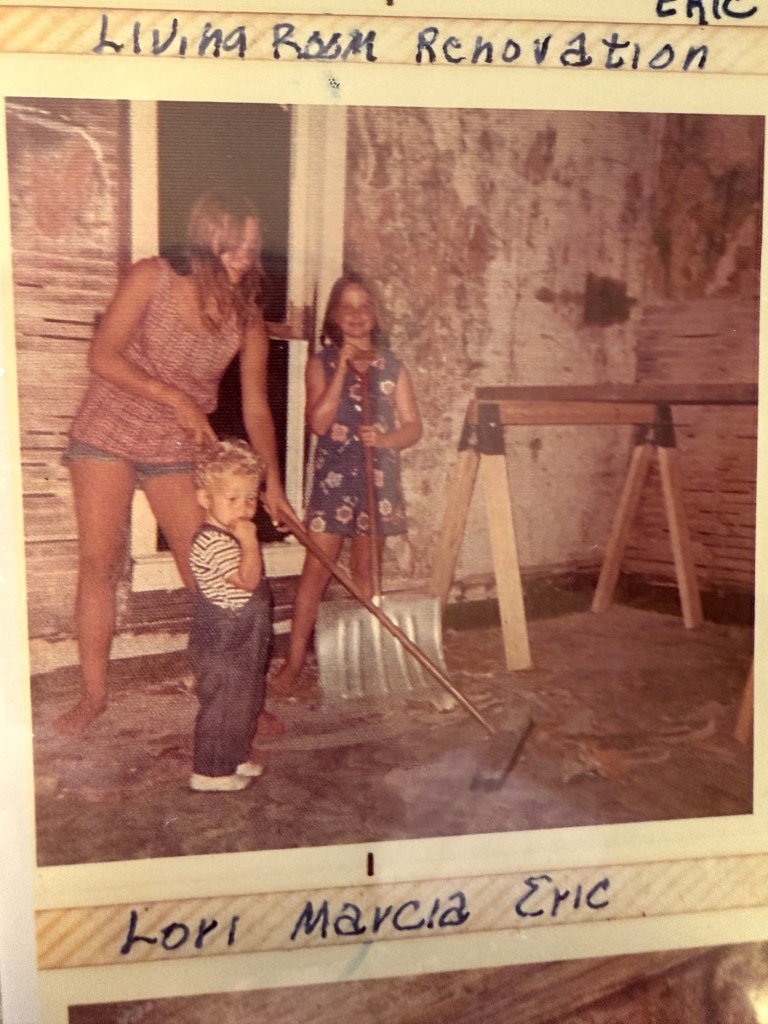
There came a time when that house disintegrated enough that it had to be torn down. We still have the farm, and a different house stands where it stood. My dad salvaged Shorty’s chair as one of his precious heirlooms. He brought it up to our Springfield, IL home. Dad’s dream was to live full-time in a small Thoreauesque cabin at the farm with only a fire, a chair, and one hook for his clothing. Shorty’s chair represented that never-realized dream.
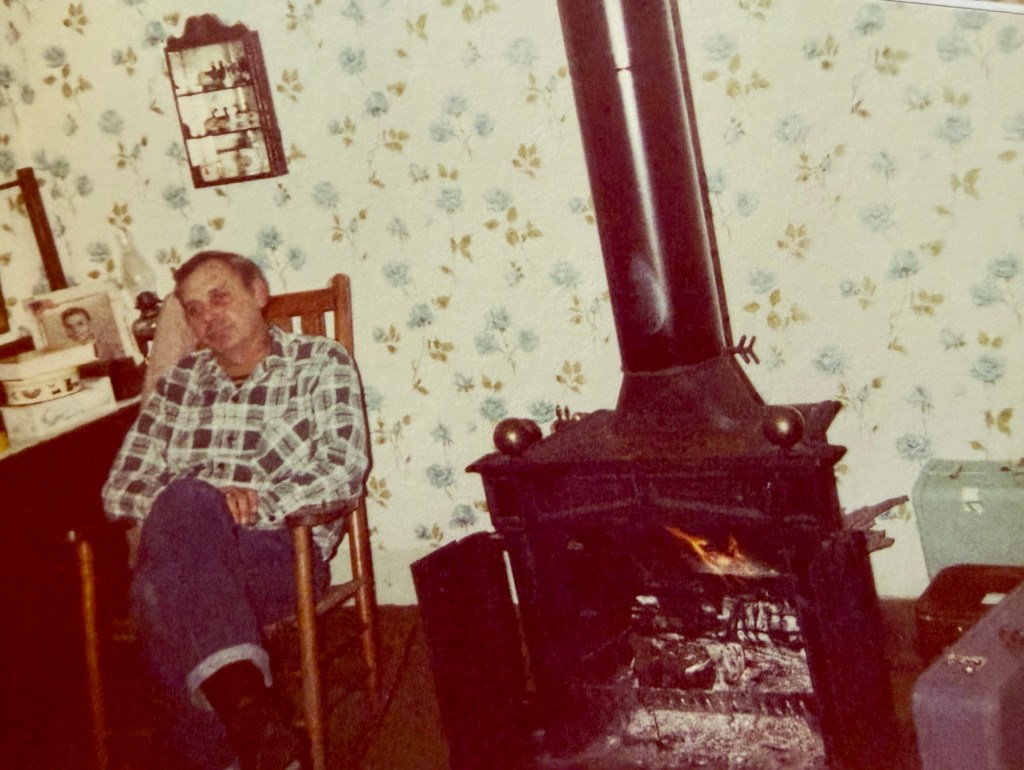
For Dad’s gift one year Mom arranged for the seat of Shorty’s chair to be re-woven because it was quite worn. Some years later, as my mom didn’t have much room for it in her house, she gifted it to me. It now sits in the modest home of our Jessamine farm. It is used mostly when extra guests come and we run out of the upholstered, more comfortable seating. But it sits there as an icon—full of symbol and meaning and memory, linking our past to our present and future on this rural landscape situated in the shared 37th Parallel North.
+++++++++++++++++++++++++++++++++++++++
“I remember the days of old; I meditate on all that you have done; I ponder the work of your hands.” Psalm 143:5 ESV