Wendell Berry: I have missed him, I will miss him

Wendell Berry died this week. The internet is filled now with photos and stories of the fortunate few who made it to his front porch for a talk with him. I am told not to envy but it is hard.

January 28, 2015, a friend and I went to hear Wendell Berry lecture at the Carnegie Center in Lexington, KY. Like an introverted paparazzo I snuck a few photos.
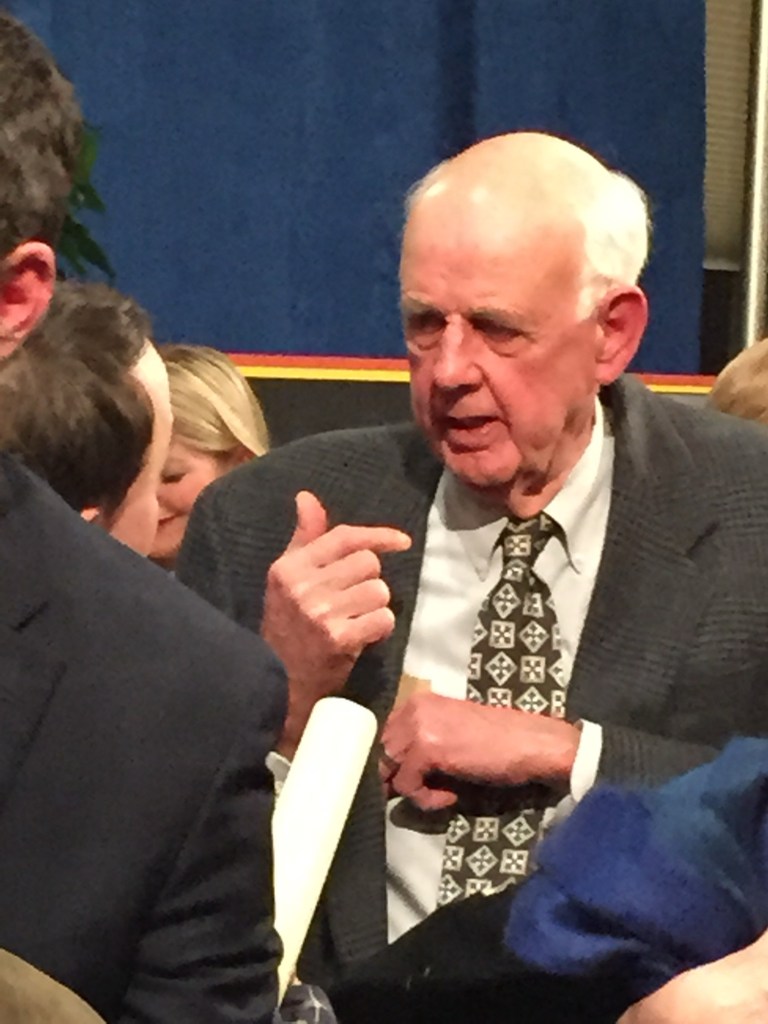
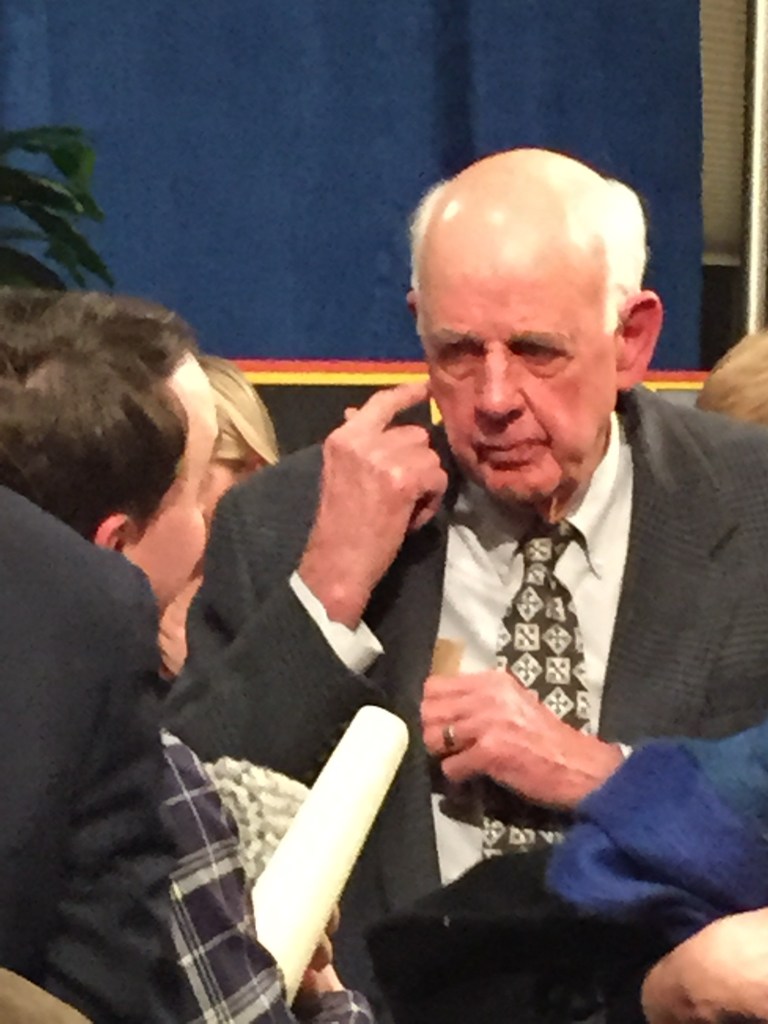
Then it was our turn to stand in line for him to sign our books. I had two. Standing in line, as a 50 something year old woman at the time, I started to feel like how I did as a junior high girl at a rock concert encountering one of the band members.  I was sweaty, nervous, unsure of what to say, wanting to be seen, known, and acknowledged by this person I admired so much. My friend, who was a bit bolder than I, went through the line first. She pointed to me and said, “She lives downstream from you on the Kentucky River.” I’m sure my face reddened. He glanced up and replied, “Well, you always want to be friends with a neighbor living downstream from you.” … or something like that.  My rememberer had shorted out by that point. Only later did I come across this Wendell Berry quote, “Do unto those downstream as you would have those upstream do unto you.”

When I got to Mr. Berry all I could eek out was, “Is it ok if I have two books for you to sign?” He replied, “Well if I said ‘no’ my publisher wouldn’t be very happy with me.”
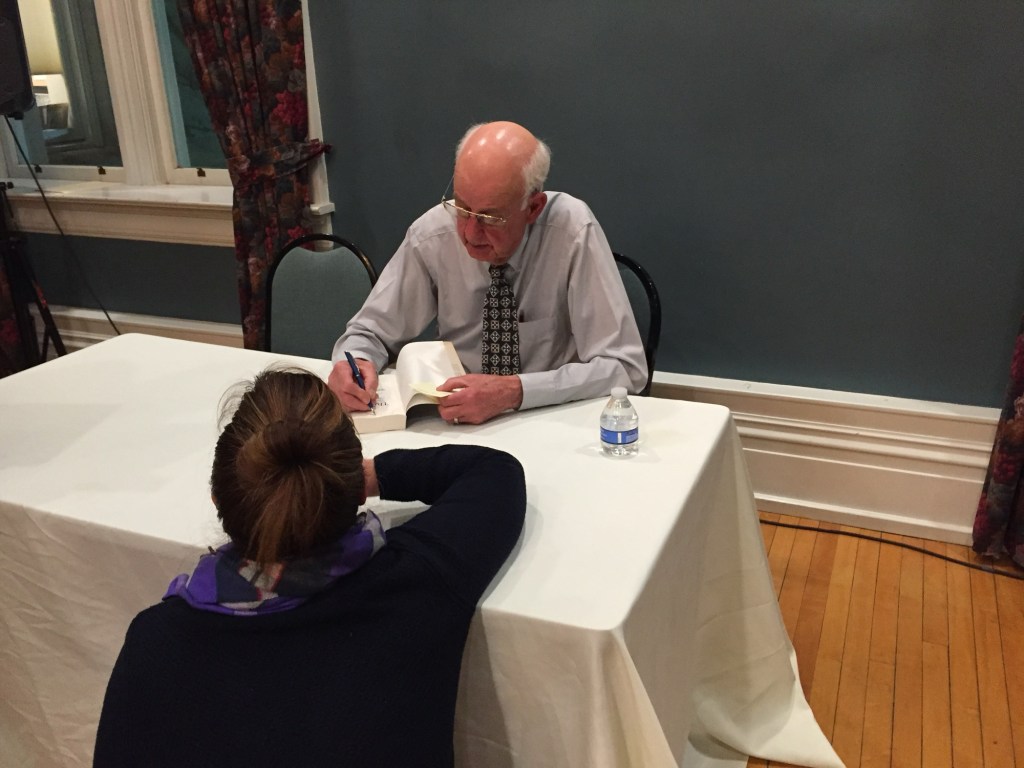
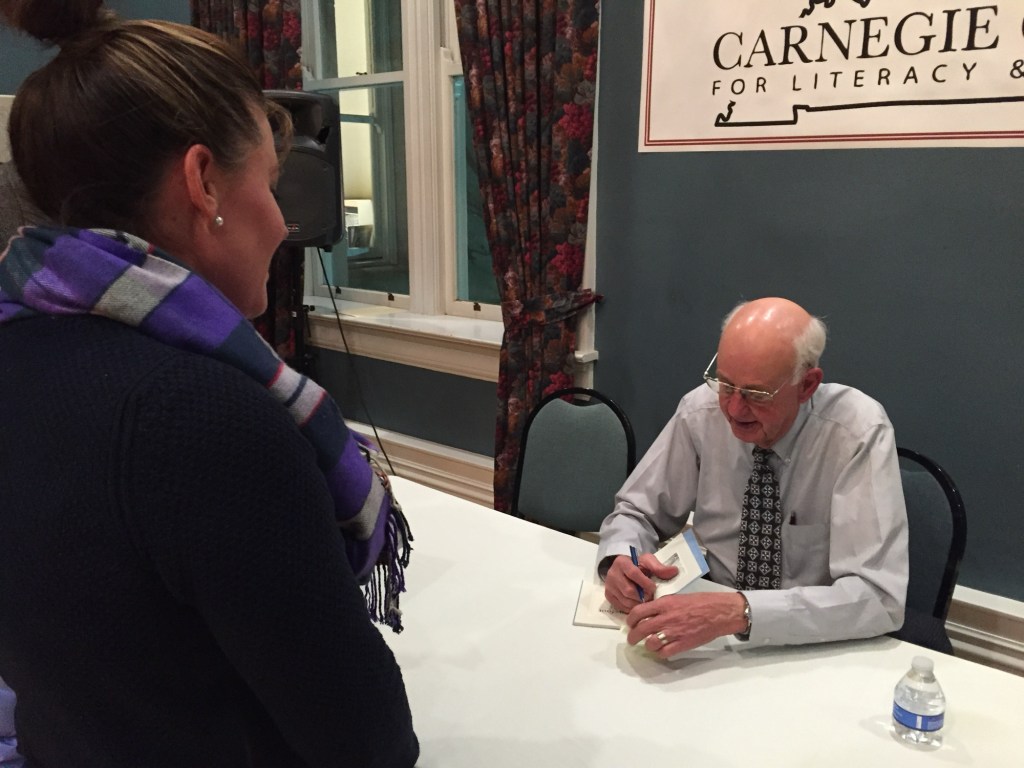
And, it was over.

And now I’ll give an even more embarrassing confession about myself; the me who is supposed to be mature and wise but apparently could still get carried away with teenagerly fandom. Two days after the Carnegie Center lecture my husband and I found ourselves passing near Port Royal, KY after going to a funeral.  I asked if we could go investigate the little town since we both really liked reading about Wendell Berry’s Port William.  We stopped and went inside the local hardware store and restaurant, and it felt like hallowed ground. I thought, “I’m sure Wendell Berry has walked this very aisle.” I suddenly wanted to be part of the Port Royal “membership” by buying something in the spirit of “neighborliness”, but the only thing slightly enticing me was a package of mouse traps, and I fought off the temptation. We continued our trek through the town passing by the local church and I pictured Tanya inside, maybe playing the piano while Wendell was out in the woods writing his “Sabbath” poetry.

Then, I went one step too far. I asked my husband if we could drive around to look for Wendell Berry’s home. I had seen some photos of his porch and front yard with solar panels in it. I knew he had a writing shack on the river near his home and low and behold we found it. I was giddy and embarrassed for being so “creepy” as to be doing this, yet my paparazzo nature came out again and I crouched down in the car snapping photos right and left hoping Wendell and Tanya were not peering out the window at this middle-aged groupie invading their private space.

Sometime later my husband and I traveled to The Berry Center in nearby New Castle, KY and Mr. Berry was there signing books. Again, I stood in line and was too nervous to know what to say. My husband, Hule, rarely suffers from having little to say, so he said all the words. In the conversation Wendell found out Hule was a pastor in the Wilmore, KY area and that initiated a few cordial sentences of exchange. But I was again mute, too starstruck to say or do much of anything more than just smile and take our freshly signed book from his hand.

What is it that makes us want a picture taken with someone or causes us to treasure an author’s signature in a book? It’s just ink on paper and yet it greatly increases a book’s value sentimentally and, for some books, even monetarily.

When I read Wendell Berry’s work it seemed like he was my friend, even my mentor. He reminded me so much of my dad. He was of the same era, worldview, and wise, contemplative, thoughtful temperament. Years ago when I gave Dad one of Wendell Berry’s books of agrarian essays, he thoroughly enjoyed it. He seemed awakened with interest by this author who respected the farm and rural life of my father’s upbringing and even his efforts to give proper respect to today’s rural life, agrarian people, and their communities and ways of being. It is what Dad had been trying to instill in us from the time we were little, and what he demonstrated to us with his life and reclamation of our family farm. I am grateful that in that one book exchange, before Dad faded and got to where he could read no more, Dad and Wendell Berry “met” on those pages.

I have returned to the Berry Center several times more recently hoping for a connection—a sighting, but it never happened. And now I have learned that it never will. I have missed him.

I once ordered a print of a photo by Tanya Berry that was displayed in one of the rooms at the center. It reminded me of my grandparents, their farm, and the simple life they lived.  The photograph now hangs in my kitchen and greets me daily. Sometimes I drift into daydreams of Tanya and I discussing photography and recipes.

One of the first fiction books I read by Wendell Berry was Hannah Coulter. I was astounded by the way he captured the mysterious experience of a nursing mother:

I took her into bed with me and propped myself up with pillows against the headboard to let her nurse. As she nursed and the milk came, she began a little low contented sort of singing. I would feel milk and love flowing from me to her as once it had flowed to me. It emptied me. As the baby fed, I seemed slowly to grow empty of myself, as if in the presence of that long flow of love even grief could not stand.

Wendell Berry, Hannah Coulter

I believe it was the essence of that passage that inspired me to write this poem:

I Am Mother

I lie down and surrender to love and risk.

Protection withdrawn, my womb opens to receive another.

My fertile bed prepared by God opens its lips to the seed.

The race is on—unpredictable and exciting—one possibility meets thousands and chooses one.

A match is made

A fire strikes

Burning and burrowing beneath the soil of blood and mystery.

I wait.  I look to stars.  I con-sider.  I lie still.  Selah

We test “waste” to know your presence.  We listen and peer in with sound waves.

I lie down once again and look to screen and risk seeing you and falling madly,

deeply,

forever in love.

I carry you around in my purse and pouch and put you on my refrigerator and marvel at the blurry, fuzzy jelly bean sized person in me,

Who is you.

I wait. I look to stars.  I con-sider.  I lie still.  Selah

I begin to pant and feel squeezing—tightness

Yes—pain

Intense—severe

I risk death with joy and moaning, for you.

You have kicked in me, punched my ribs, rolled like a bowling ball inside me. 

How I have longed to see you and touch you and now it is immanent and I am scared.

As you emerge I am born.

I am mother.

I hold you.

I wait.  I look to stars.  I con-sider.  I lie still.  Selah

I give my days and nights to you.

I give my body once again—my rest and food, vitamins and drink all churn inside me until milk comes flowing through my chest to nourish you…sustain you.

My hours are yours, my body is given—scarred, stretched, engorged.

This is my body, broken for you.  Take and eat.

You snort and grunt, draw near to suckle, your hands knead like a cat on a blanket, like a baker with his dough.

I wait.  I look to stars.  I con-sider.  We lie still.  Selah

Since my middle school days there are very few people I have wanted to meet or get to know or know me, but Wendell Berry was one. There is an admiration there. Someone who has my respect. Someone I often quote, even in this very blog. Someone from whom I believe I could have learned good things. After I read Theo of Golden several years ago, I felt the same way about the author Allen Levi. I even thought—this guy reminds me of Wendell Berry! I have yet to go stalk Mr. Levi, but I did hear myself saying to a friend, “There are very few people I’d like to meet, but two of them are Wendell Berry and Allen Levi. I would love to sit at a dinner table with them and talk to them.” Later I imagined that scene and knew I would likely be so star-struck I couldn’t even manage asking a question, let alone allow myself to speak articulately enough so as to become known. I also understand that these gifted people only have so much capacity and it seems insensitive to ask to take up a portion of their limited, valuable time.

And yet, today, I grieve. I have missed him. I will miss him. I pray for and grieve for his family and friends. I grieve the loss of my hope of becoming one of those friends and the loss of this man with so much wisdom who has now laid down his sharpened No. 2 pencil and yellow notepad.

Our Garden This Year

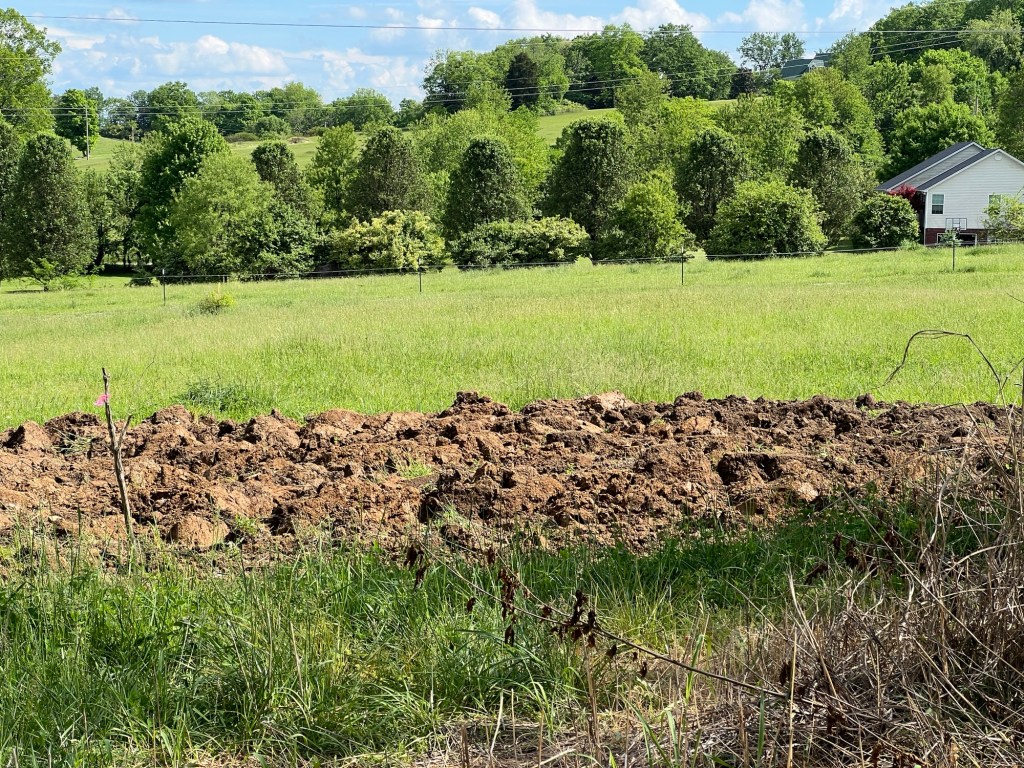
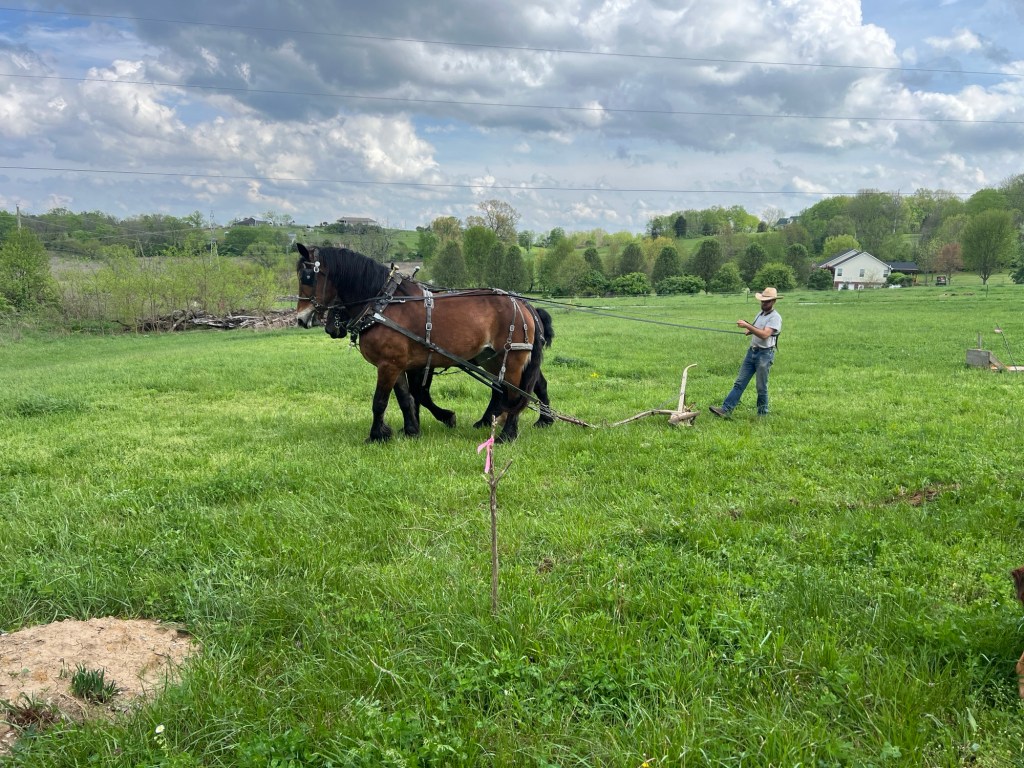
Our garden this year started slowly.  We had arranged for a local farmer to till the ground for us in March, but that fell through, and we were at mid-April, the typical last frost time, with a handful of seed packets but without a plowed garden bed.  I’ve read about the no-till garden options, and I wish I would have done that, but I hadn’t, so we were at a standstill.

That is, until our new neighbor offered to come over and till the garden with his workhorse and plow!  I felt like a character in a Wendell Berry novel living in Port William. Even our grandkids got to watch!

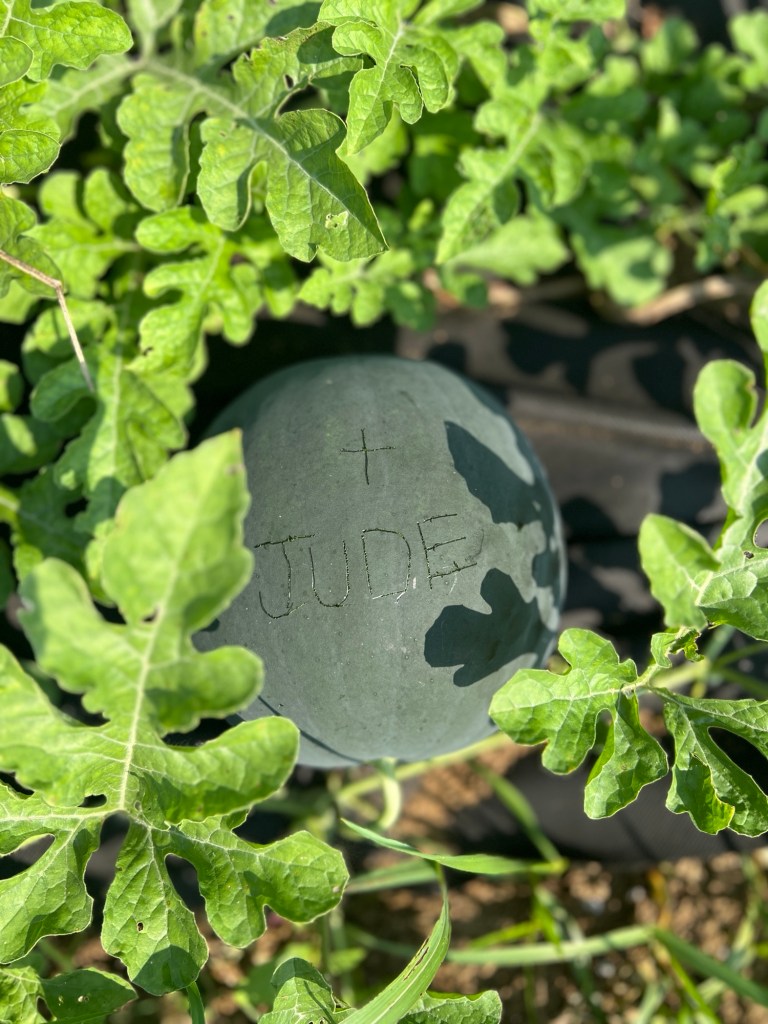
Then Hule, our daughter, and I, all took turns the next few weeks planting what we wanted from our seed selections.  I wanted squash and okra.  Hule also planted watermelon and pumpkins.  Sarah planted some of the more exotic and heirloom choices. 

At first there was very little to show for our efforts.  Then there were weeks of drought and hot weather, and we got a sprinkler.  We likely over-watered because our water bill spiked up to over $100 from our typical $44/mo.  There went our “saving money” by having a garden.

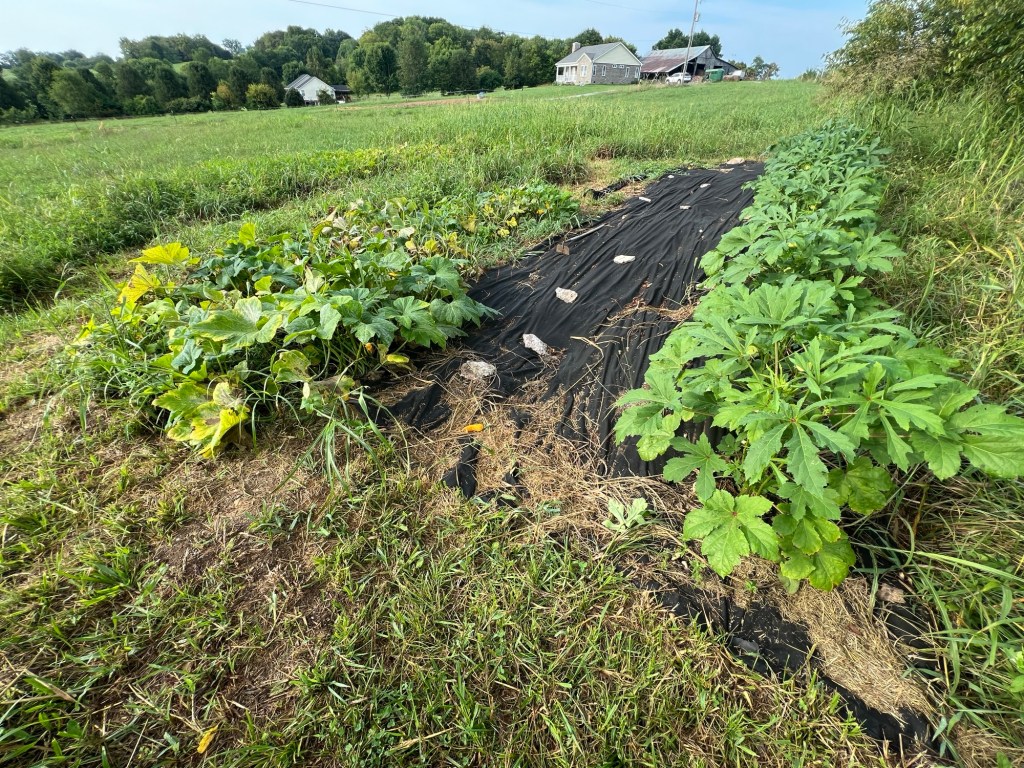
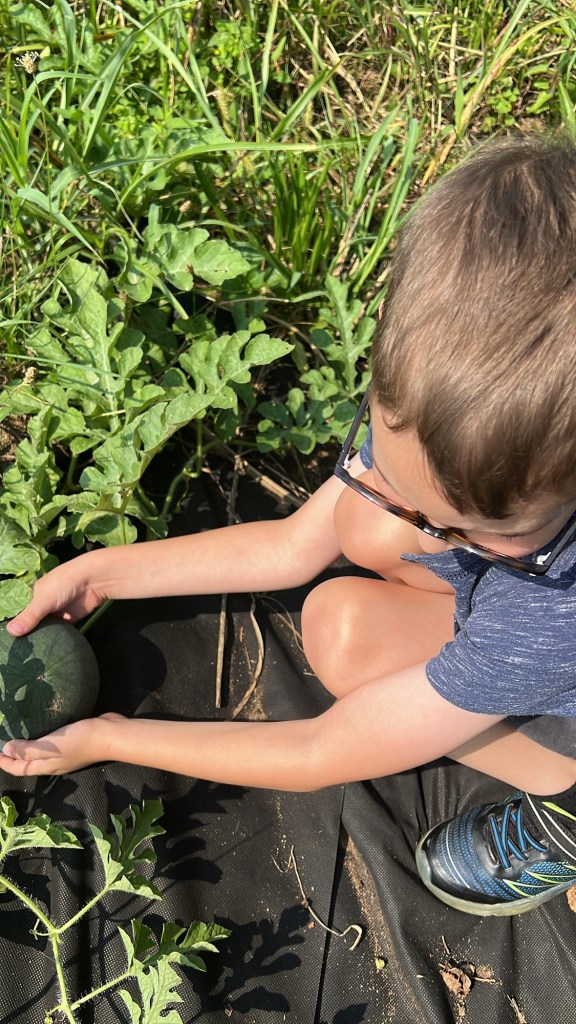
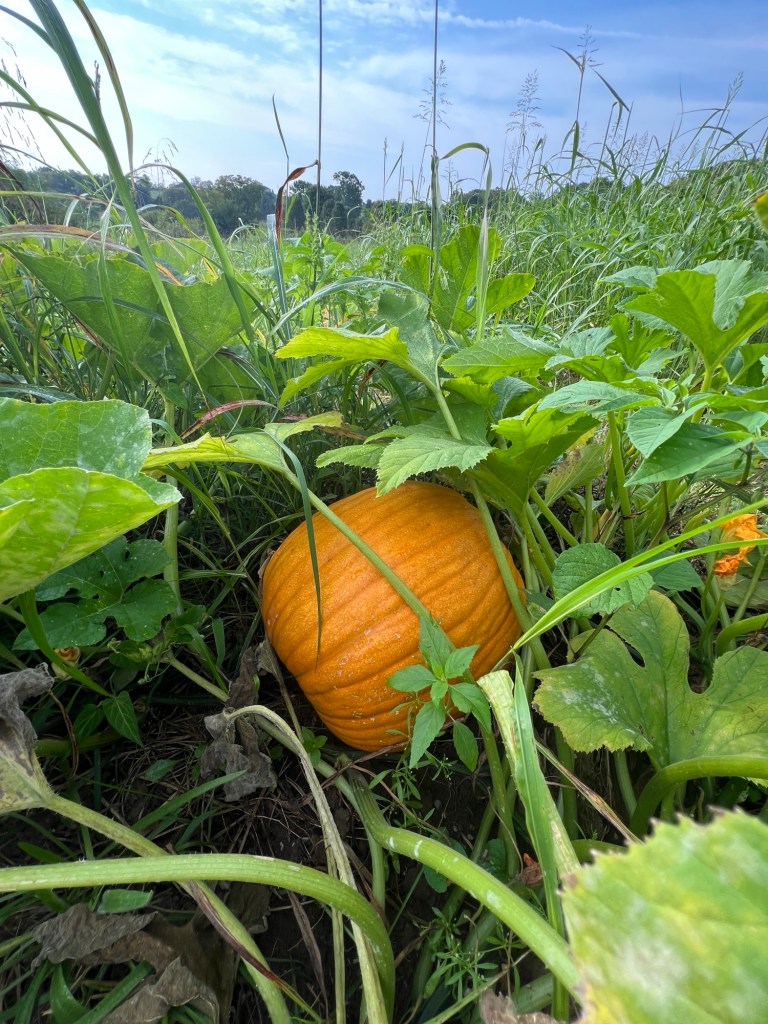
But, eventually, and through many hours of Hule’s tending and weeding and laying out landscape cloth, the okra emerged in a nice straight line.  Little baby watermelons came out—some too cute not to be picked and pocketed by our grandson.  Even pumpkins grew!  That has been fun watching the pumpkin vines stretch out into the pasture as they make more and more small orange globes.

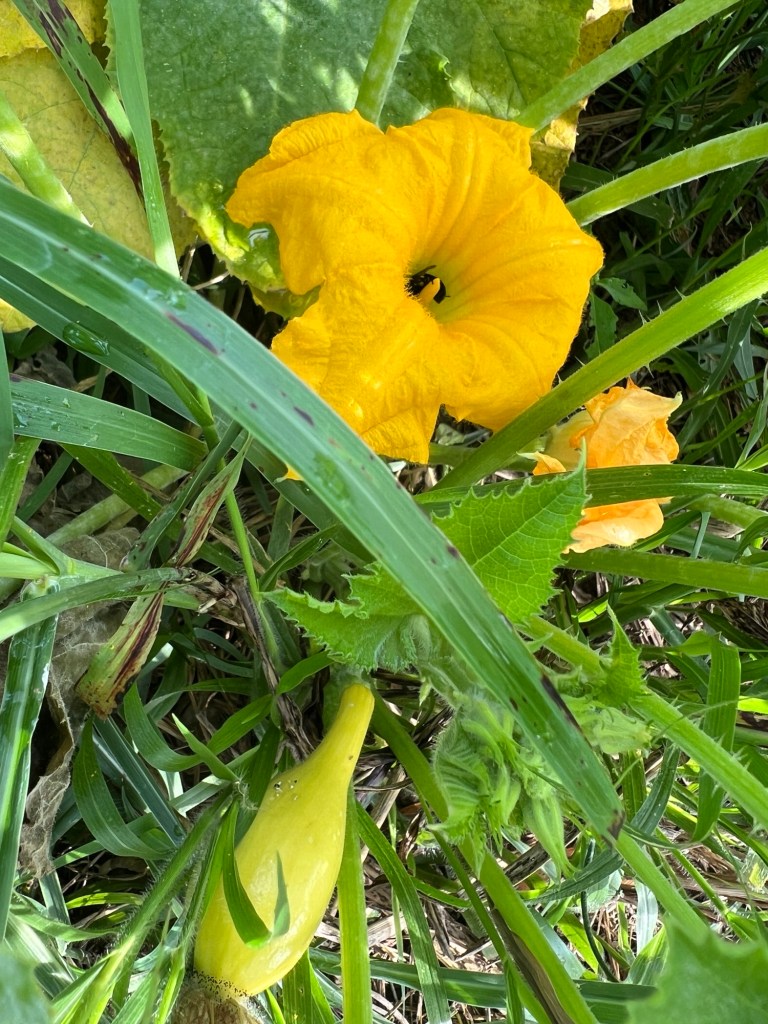
But, by far the star of the show has been our summer squash.  Unbeknownst to us, all 3 of the planters had taken on the task of planting hills of squash.  So—we have been inundated with it.  I’ve made fried squash, boiled squash, stir fry squash, and squash casserole.  We’ve brought bags of squash to our daughter in Lexington and to our neighbor.  And, for those “big’uns” (as my grandparents might have said) we created a new compost pile—a pile of crooked neck gold out in the field that, we hope, will eventually become soil again.  Some of the squash went to our 3 chickens, but they are particular and slow to eat it.  If there is any hope of fruit or worms, they turn their beaks up and snub the squash.

Whenever I watch this miraculous unfolding of vine and leaf and fruit from seed, sun, soil, and water, I am taken aback.  When the small green striped orb in my grandson’s hand becomes as big as his torso in just a few short weeks, and develops into something enough to satisfy several families at a picnic, I am in awe.  When I look at the gorgeous yellow and purple blossoms on the okra stalks morph into green edible pods and the gigantic orange squash blossoms birth cute baby yellow vegetables overnight, I am mesmerized.

The garden becomes a sanctuary.

It all reminds me of a quote—one of my favorites—from Wendell Berry from The Art of the Commonplace: The Agrarian Essays:

“…outdoors we are confronted everywhere with wonders; we see that the miraculous is not extraordinary but the common mode of existence. It is our daily bread. Whoever really has considered the lilies of the field or the birds of the air and pondered the improbability of their existence in this warm world within the cold and empty stellar distances will hardly balk at the turning of water into wine – which was, after all, a very small miracle. We forget the greater and still continuing miracle by which water (with soil and sunlight) is turned into grapes.”

I caught myself recently telling someone …

that it was the funnest thing I do in life. (My husband, Hule, mumbled an indignant comment in the background :).)

What was that “thing”? Mowing.

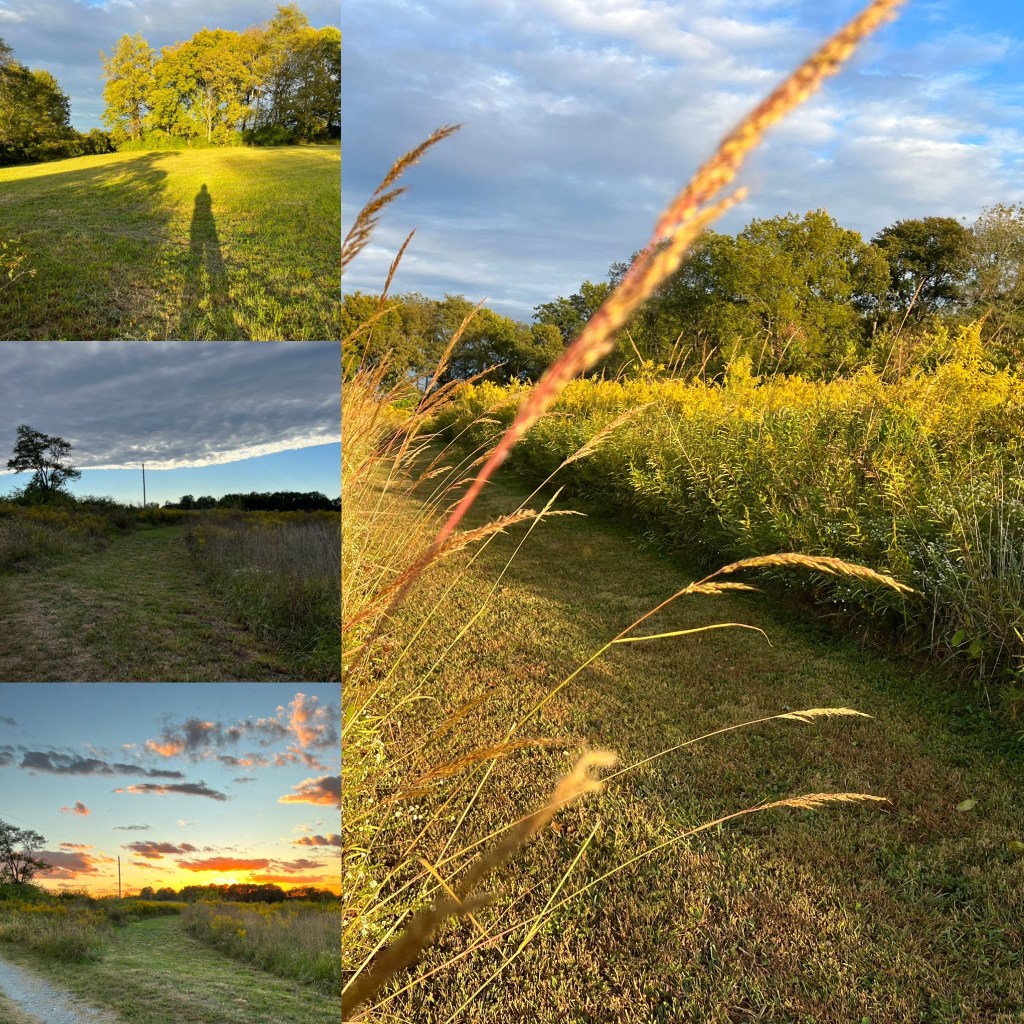
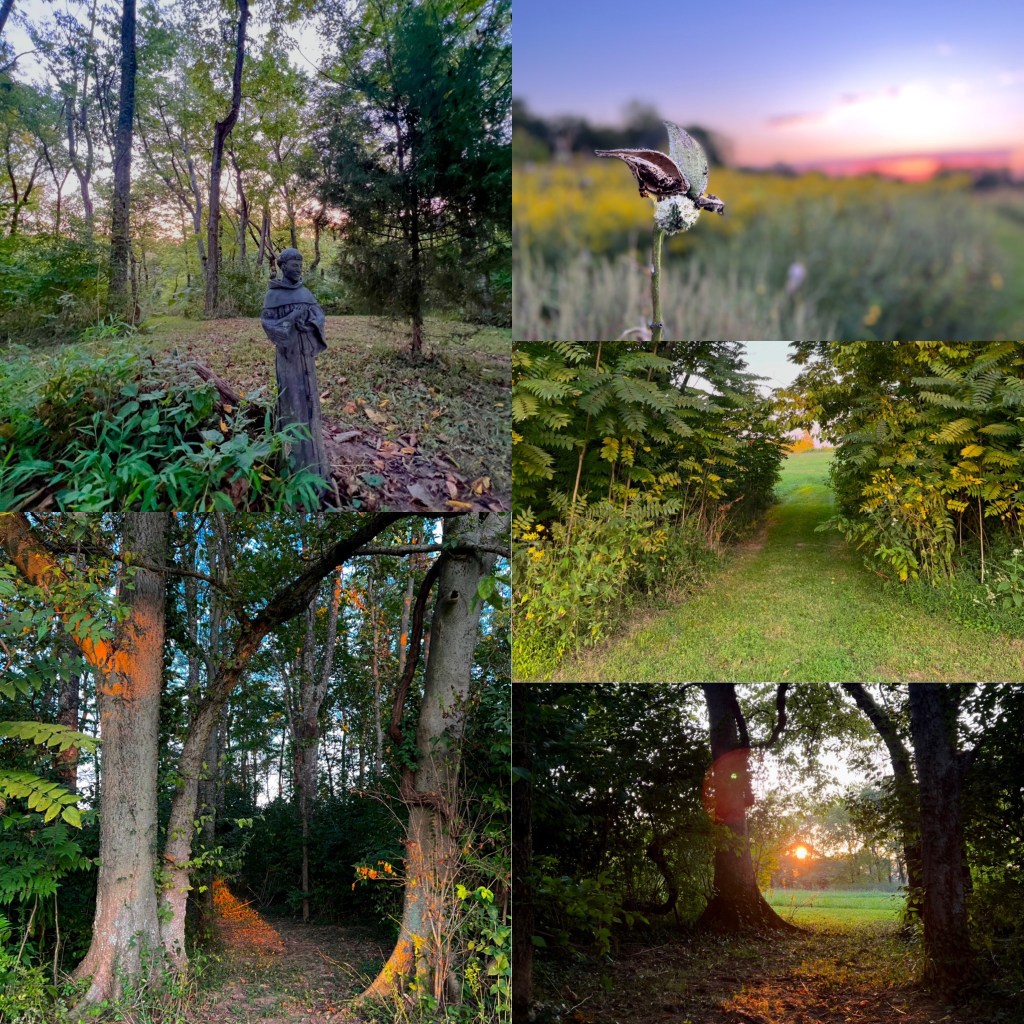
Mown paths on our farm

My love affair with mowing began one summer when I was about 11 or 12. I wanted a 10-speed yellow Schwinn bicycle and my dad said if I mowed the lawn for the summer he would buy it for me. So, week by week that summer, I befriended the delightful smell of cut grass, learned the skill of pushing a purring machine in a straight line, and acquired a taste for this delicious cocktail of exercise, sunshine, aromatherapy and beauty.

Fast forward to 2014 when we moved to our Jessamine farm. We had only a push mower and the uneven terrain, big yard, and my age combined to quell my love for mowing until, low and behold, we were gifted with a lovely John Deere riding lawnmower. I was in heaven!

Besides mowing our yard, we had gotten a grant to plant native grasses, forbes, and flowers on several acres on the back of our property, and I relished preparing the fields with a thorough haircut before planting.

Some of our flowers and vegetation

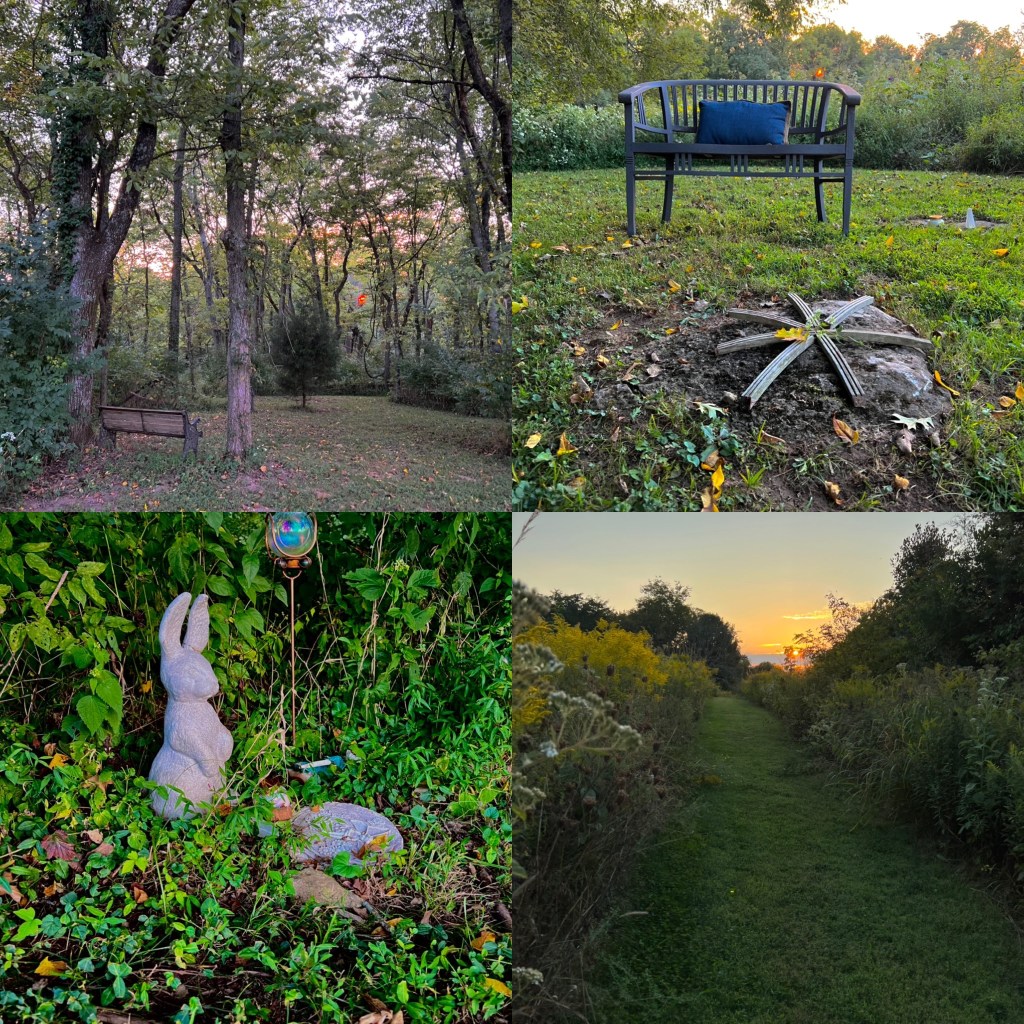
Once the flowers and grasses came in (Purple Coneflower, Black-eyed Susan, Little Bluestem, Virginia Wild Rye, Tall Dropseed, Partridge Peas, and Illinois Bundle Flower), I began cutting paths through them so we could walk freely in the fields. This was the best! The sun would begin to set and I filled with endorphins and life-enhancing neurotransmitters as I finished up week after week during the summers. Eventually I began expanding the mowing to create what I called “living rooms”—little mowed spaces furnished with chairs or benches and decorated for rest, gathering or solitude, prayer and contemplation. I now have 9 living rooms…& counting:

1. Camp Julian

2. Hazel’s Haven

3. Julianne’s Hideaway

4. Sarah’s Secret Spot

5. Memorial Point

6. Naked Holy Rocks

7. The Forest Trail

8. Matt’s Man Cave

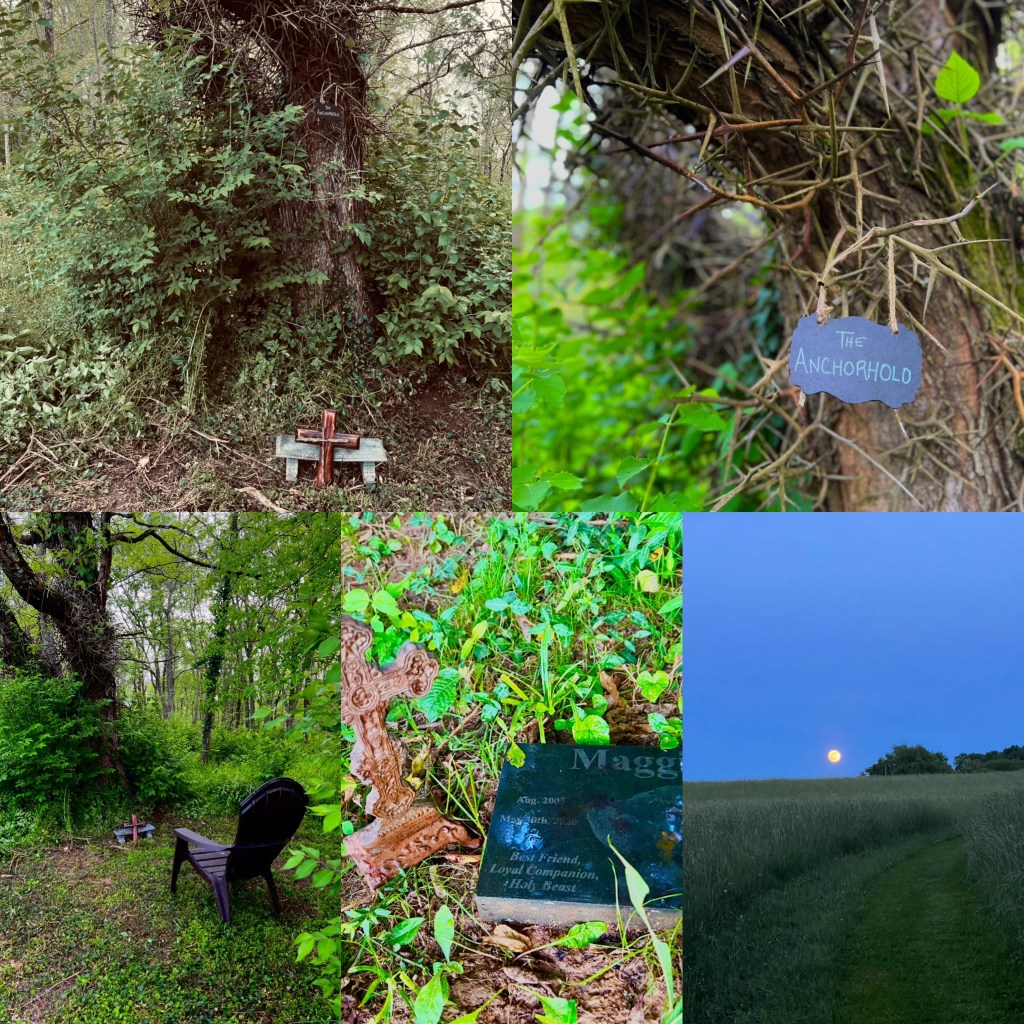
9. The Anchorhold

Sometime in the future I will try and feature each of these on the blog with photos and explanations.

Memorial point, a path nearby, and Hazel’s Haven

This year we added a new mower to our “fleet”. It’s an Exmark riding lawnmower whom I have named Hildegard, Hildy for short, after one of my favorite saints, Hildegard of Bingen. We also have been given a Honda ATV named Ruby, and when the sad time comes that the fields and paths and living rooms are all cut, Ruby and I go tour the grounds together surveying the Gardens.

Sunset at Loretta’s Living Room, Julianne’s Hideaway, and the path of Eden’s Loop

In Eden tending the garden and naming were the tasks given by God to the first humans. We were made for this. We find meaning, hope, and home, finding ourselves and one another, with our Creator, while tending, walking, and soaking in beauty.

Paths

I encourage you today, to go find Eden, observe place and nature long enough to name, find our Creator in an outdoor living room and chat, discover fun and meaning while tending the beauty of your place and paths.

The Anchorhold, Maggie’s grave at Memorial Point, and a Harvest Moon coming up at the end of a satisfying mow.

A Frost Flower Bouquet

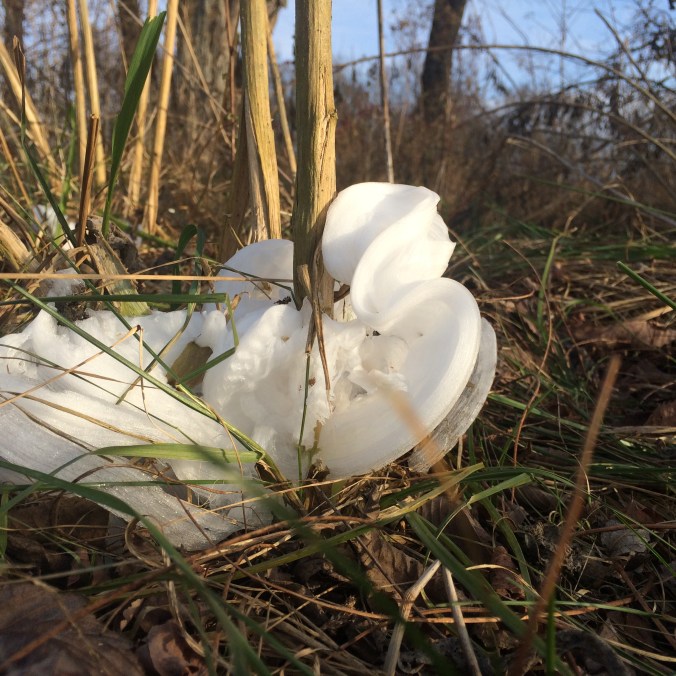
My husband often brings me flowers from his walks back to our pasture.  I don’t expect much from his winter walks, but the other day he surprised me with a bouquet of flowers…not in a vase, but on his iPhone.  They were frost flowers.

Before we moved to our farm I had never seen or heard of frost flowers.  The first winter we walked the land and saw these ice formations dotting the ground.  Since then we’ve learned that they come only with certain plant species and just at particular times of the year–when the unfrozen ground meets the freezing atmosphere and the capillary action of freezing water creates these fleeting frosty blossoms.

It’s kind of a miraculous sight–easy to miss.  If we didn’t walk by those particular flowers at that certain hour on that certain day, we would never see the icy display.  And as soon as it comes it is gone.  Like with the ephemeral trilliums that fill our woods in the spring, we must seize the day…carpe the big fat diem, as I might say…in order to behold this bouquet of icy petals.

So much of life is ephemeral…transitory: a newborn’s first days; the burst of a sunrise; a newlyweds’ honeymoon; a meteor shower; a blustery summer thunderstorm; a glorious sunset.  But because it is short-lived we do not reject it, but cherish it all the more.

At this Christmas season I’m thinking of the sudden short-lived sights that the shepherds saw on their walk back on the pasture land that night–a blaze of heavenly light, a talking angel, a multitude of the heavenly host, a young virgin mother and her husband, a newborn King in a feeding trough.  This was their ephemeral bouquet on that night.

And so at this wintery, frosty season when busyness could take my attention away from the miraculous sights and insights in front of me, I want to be open-eyed, open-handed,  open-hearted, to receive what will only be offered in this fleeting time we have on earth.

“Glory to God in the highest, and on earth peace among those with whom he is pleased!”  Luke 2:14 ESV

Advent

img_7758

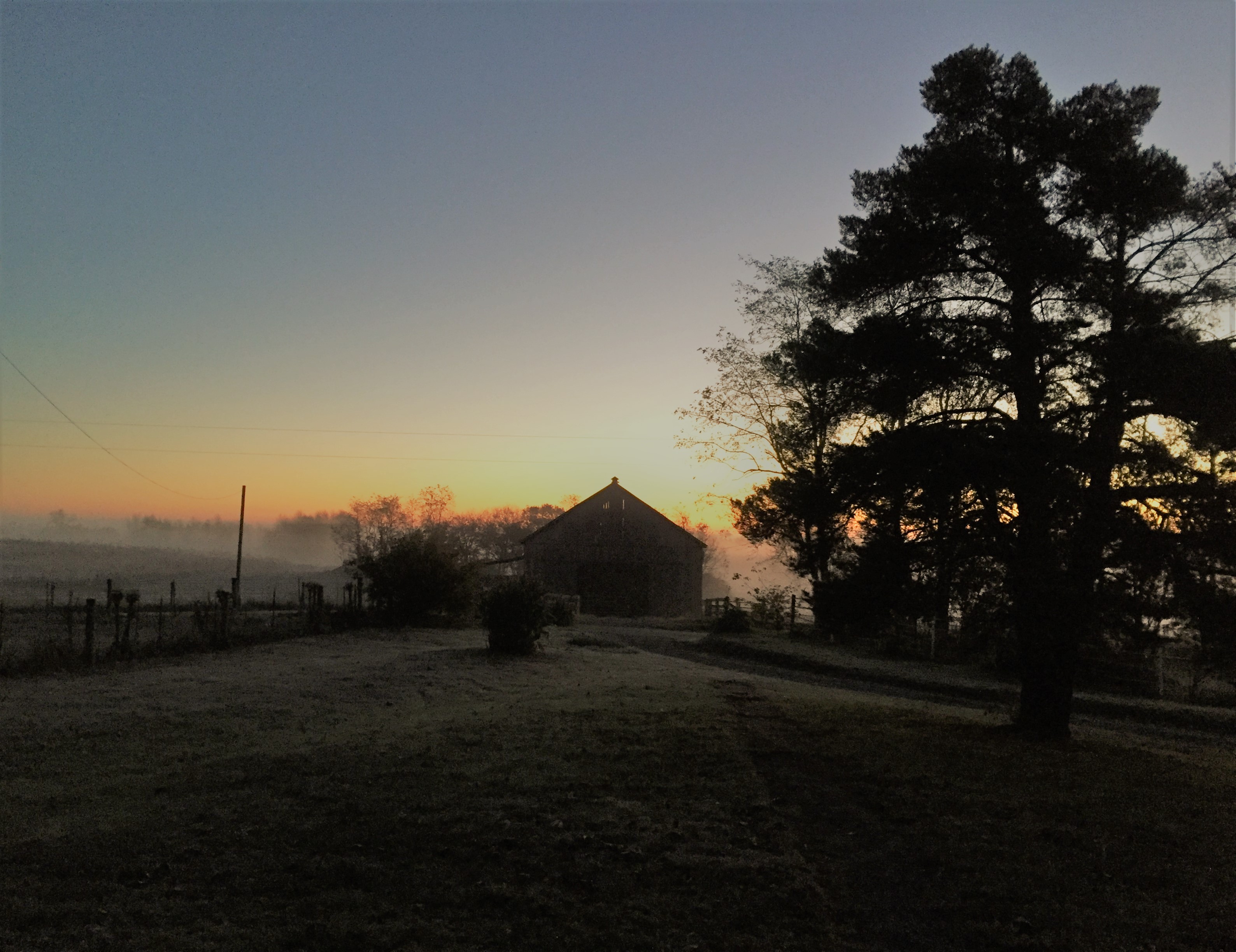
The farm quiets with deep frosts. Yellow and brown leaves give up the ghost and fly down. The wild flowers we planted in the fields lie down to sleep. Coyotes roam naked acres. My garden boasts skeletons of corn stalks and woody okra pods.

We have given thanks to God above and received His cornucopia of bounty.

We find our winter coats and gloves and stack wood. The stovepipe bellows again and we pull out purple and pink candles arranged in circular wreaths. Focus on the coming is about to begin:
Advent…a new year dawns.